
Manning Makes History as Draft Stock Questions Linger Across College Football
Week 13 of college football delivered a mixture of historic performances and sobering reality checks for prospects eyeing the 2026 NFL Draft. While some players strengthened their cases for early selection, others saw their stock plateau or even decline during crucial late-season matchups that will ultimately shape draft boards come April.
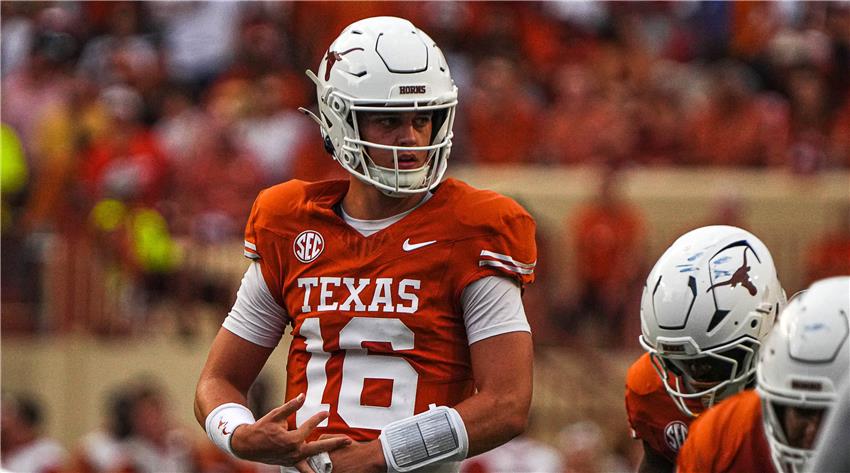
The weekend's marquee performance came from Arch Manning, who accomplished something no Texas player had ever done before. But the historic nature of his six-touchdown showcase against Arkansas raised as many questions as it answered about his draft readiness and future timeline.
Manning's Triple Threat Performance Delivers Historic First for Texas
Texas quarterback Arch Manning achieved the football equivalent of hitting for the cycle during the Longhorns' 52-37 demolition of Arkansas. The redshirt sophomore became the first player in program history to throw, rush, and catch a touchdown in the same game, finishing with a career-high 389 yards through the air on 18-of-30 passing.
The performance was exactly what Manning needed following an inconsistent start to his first season as a full-time starter. However, scouts remain divided on his immediate NFL prospects. One thing is clear from evaluators who have studied his tape closely: Manning is very much still in the early stages of development as a starting quarterback.
Where Manning has disappointed NFL observers most is in his mechanics. His body hasn't synchronized properly with his throwing motion, creating inaccuracy on throws that should be routine for a quarterback with his pedigree. To truly reach the next level, those fundamental issues must be addressed. The consensus among draft analysts remains that the earliest we'll see Manning in the NFL is 2027, meaning he'll need at least one more full season as a college starter before declaring.
Manning needs to become a great college quarterback before he can become a great NFL quarterback, and he hasn't gotten there yet. The potential exists without question. But one full year as a starting signal-caller won't be sufficient to reach that next level before making the jump to professional football.
The Quarterback Class Continues to Underwhelm
The quarterback situation extends far beyond Manning's development questions. The entire 2026 class has failed to live up to preseason expectations that had some projecting six or seven first-round signal-callers. That optimistic outlook has evaporated as the season has progressed.
Oregon's Dante Moore has been one of the few bright spots, particularly his composed performance against Penn State in a hostile environment. Despite struggling against Iowa earlier in the season, Moore showed unflappable demeanor and consistently found targets at all three levels against the Nittany Lions. His 29-of-39 passing for 289 yards and three touchdowns in the double-overtime victory demonstrated the poise that has scouts intrigued, even with only 12 career starts under his belt.
Moore became just the third Oregon player in the past 30 years to throw for three or more touchdowns in four of the team's first five games, joining Bo Nix from 2023 and Akili Smith from 1998. The 6-foot-3, 206-pound quarterback has received comparisons to top-tier prospects based on his tools, production, and potential. However, questions remain about whether Moore will declare for 2026 or return to school for additional development.
Indiana's Fernando Mendoza has emerged as another legitimate contender for the top quarterback spot. The California transfer engineered an impressive comeback against Penn State and has thrown 14 touchdown passes without an interception through his first four games with the Hoosiers. At 6-foot-5 and 225 pounds, Mendoza displays the command, poise, and touch accuracy that NFL teams covet. His best attribute is how accurately he delivers the football, giving receivers plenty of time and room to create after the catch.
Mendoza entered Week 13 with a nation-leading 20 red zone touchdown passes, five rushing scores, no interceptions in the red zone, and only one sack taken in those crucial situations. Indiana leads the nation in total red zone passing touchdowns with 23, and Mendoza's efficiency has been a primary driver of that success.
Alabama's Ty Simpson presents another intriguing option despite starting only eight career games. The 6-foot-2, 208-pound signal-caller has thrown multiple touchdown passes in all eight starts this season, demonstrating remarkable consistency for someone with such limited experience. His awareness, pocket maneuverability, and decision-making have him ahead of the development curve, though his size will likely hurt him at the very top of the draft where teams typically chase ceiling with their early quarterback selections.
Miami's Carson Beck has attempted to revive his draft stock after an inconsistent final season at Georgia. The Georgia transfer has thrown seven touchdowns without an interception over his past two games, including a 320-yard, four-touchdown performance against Virginia Tech. His four touchdowns against Florida State earlier in the season reminded evaluators how smooth, poised, and accurate Beck can be when working from a clean pocket. After entering the season with primarily Day 3 grades from scouts, Beck is trending upward, though most still consider him a middle-round prospect rather than the potential first overall pick he was projected to be before last season.
Defensive Line Dominance Continues to Shape Draft Boards
While the quarterback class struggles for identity, the defensive line group continues to showcase elite talent that will populate the first round. Miami's Rueben Bain Jr. has been exceptional throughout 2025 after an injury-riddled campaign the previous year. The 6-foot-3, 275-pound defender constantly hustles and never takes plays off, displaying the relentless motor that defensive coordinators dream about.
Bain generates power, bends well, shows speed off the edge, and knows precisely how to use his hands to gain leverage. He can create pressure both inside and outside, with particularly effective inside moves complemented by a reliable rip technique to beat blockers. Taking the right angle to the quarterback is an underrated trait for edge rushers, and Bain executes it as well as anyone in college football. Beyond pass rushing, he sheds blockers effectively and makes consistent run stops. If he stays healthy throughout the season, Bain possesses top-10 upside.
Oregon's defensive line has made significant strides throughout the season, particularly in stopping the run. After struggling in that area early in the fall, the Ducks held USC to just 52 rushing yards despite the Trojans averaging over 190 rushing yards across their first 10 games. The ability to eliminate opposing teams' running attacks has been crucial to Oregon's success and playoff positioning.
A'Mauri Washington anchors that Oregon defensive front at 6-foot-3 and 330 pounds. His quickness off the snap is ridiculously impressive for a big man built more like a run-plugging tackle than a penetrator. Watching him make plays with speed and then drop his weight to stop the run game is truly remarkable. Washington's consistent performance has him firmly in Round 1 discussions.
Clemson's defensive line features multiple talented prospects, including Peter Woods at defensive tackle. The 6-foot-3, 315-pounder has shown flashes of the dominance that had him projected as a top-five prospect before the season began, though inconsistency has plagued his campaign. His tape from prior seasons displayed a player who was rarely moved around by offensive linemen, but questions about his ability to get off blocks and finish plays have emerged this year.
Offensive Line Battles Define Championship Contenders
Penn State's interior offensive line is anchored by guard Olaivavega Ioane, who continues to dominate opponents with his exceptional combination of size, power, and agility. The 6-foot-4, 330-pound guard drives defensive tackles off the ball with authority, sustains blocks effectively, and generates movement on field blocks. His ability to reach the second level and physically torque defenders out of running lanes is particularly impressive.
Ioane's agility stands out as exceptional for someone his size. He brings 30 starts worth of experience and remarkable consistency to every snap. Scouts project him as a late first-round selection, similar to Cowboys guard Tyler Booker who went 12th overall in the most recent draft. Ioane appears locked into the 12-25 range based on his command of Penn State's offensive front.
Utah boasts two offensive tackles who could both land in the top half of the first round. Spencer Fano and Caleb Lomu have helped the Utes allow just 12 sacks all season, tied for 12th-best in the FBS. The interesting dynamic among scouts is determining which prospect grades higher.
Fano, the 6-foot-6, 302-pound right tackle, needs to add bulk to his frame but displays outstanding foot quickness and physicality. However, Lomu plays the more coveted left tackle position and possesses slightly more upside despite not being quite as far along in his development. At 6-foot-6 and 304 pounds with solid technique, Lomu projects as the better long-term prospect. Both players participated in Senior Day ceremonies prior to Utah's game against Kansas State, a strong indicator of intentions to declare for the NFL draft.
Miami's Francis Mauigoa presents an interesting evaluation case. Listed as a right tackle, the 6-foot-6, 335-pound lineman is built like a guard and projects better at that position according to multiple scouts. His game is sound, as he generates power at the point of attack and uses his strength exceptionally well. Mauigoa strictly plays right tackle currently, but based on conversations with evaluators, multiple scouts agree he fits better on the interior. His physical run blocking and consistent pass protection have him ranked atop interior offensive line boards with potential to be selected inside the top 15 picks.
Running Back Class Takes Shape Behind Clear Leader
Notre Dame's Jeremiyah Love continues to separate himself as the undisputed top running back in the class. His 94-yard touchdown sprint against Boston College showcased the patience, vision, and explosive speed that make him special. At 6-foot and 214 pounds, Love displays elite long speed, the ability to break off massive runs, and exceptional patience and vision behind the line of scrimmage.
The Reggie Bush comparisons are frequent because of his dynamic open-field ability, but Love actually brings more finish to his game, willing to lower his shoulder and punish defenders. His versatility as both a runner and receiver makes him a seamless fit for modern NFL offenses. One general manager texted during the Arkansas game: "Now that's what a first-round running back looks like." Love could be in play as a top-10 or top-15 selection for running back-needy teams.
Michigan's Justice Haynes has made a strong case as the second-best rusher in the class. In seven games this season, he has accumulated 857 rushing yards and 10 touchdowns, with six 100-yard performances leading the FBS. His 26-carry, 152-yard, two-touchdown effort against Michigan State marked his best showing of the season. At 5-foot-11 and 210 pounds, Haynes is a determined runner who brings explosive dynamics to the backfield. Originally viewed as a Day 3 pick entering the season, he has climbed into top-75 consideration.
Penn State features a talented duo in Nicholas Singleton and Kaytron Allen, though neither has found consistent rhythm behind an offensive line that has struggled throughout 2025. Singleton started the season as the second-ranked running back in the class, but limited carries and lack of space have hindered his production. At 6-foot and 224 pounds, his all-around ability as a runner, pass catcher, and blocker still projects well to the next level. Allen has actually been more productive despite being the lesser-regarded prospect, making a name for himself as a 5-foot-11, 217-pound downhill power runner.
Wide Receiver Race Remains Wide Open
Arizona State's Jordyn Tyson has hamstring issues that have sidelined him recently, but he remains the favorite for WR1 status when healthy. The 6-foot-2, 200-pound receiver is a polished and powerful route runner with strong hands and exceptional run-after-catch ability. His 105-yard, one-touchdown performance against Texas Tech before the injury showed why he leads this receiver class.
USC's Makai Lemon has emerged as a serious challenger for the top spot. Despite checking in at just 5-foot-11 and 195 pounds with a limited catch radius, Lemon is a proficient and sharp route runner with sweet footwork and great instincts. His 10-catch, 153-yard, one-touchdown performance against Iowa showcased skills that translate beautifully to a dangerous slot role in the NFL. Scouts watching what Jaxon Smith-Njigba accomplishes for the Seahawks can easily envision Lemon excelling in that same capacity.
Ohio State's Carnell Tate continues the Buckeyes' tradition of producing first-round receivers. The 6-foot-3, 195-pounder's physicality and ability to win 50-50 balls stand out on tape. His 111-yard, two-touchdown effort against Wisconsin demonstrated why scouts love his game. Tate's overall profile projects somewhere in the back half of Round 1, similar to recent Ohio State products Emeka Egbuka and Jaxon Smith-Njigba who both went in the 19-20 range.
Alabama's Germie Bernard has become one of the most talked-about receivers in the class. At 6-foot-1 and 204 pounds, he functions as a gadget player who excels both as a receiver and when aligned in the backfield. His two-score performance against South Carolina, including one rushing and one receiving touchdown, showcased the versatility that draws comparisons to Deebo Samuel. Bernard's route-running skills are actually ahead of where Samuel was coming out of college, which is why he carries a Round 1 grade despite his unconventional role.
Texas A&M's KC Concepcion deserves mention in the WR1 conversation as well. The NC State transfer has transformed into one of the most dynamic targets in the country during his first season with the Aggies. His seven-catch, 158-yard, one-touchdown showing against South Carolina, plus a 79-yard punt return score, displayed his explosiveness. At 5-foot-11 and 190 pounds, Concepcion is a refined route runner who displays competitiveness after the catch and strong hands. The biggest concern is consistency, as he has six drops this season including a dropped touchdown. Still, he projects as a top-75 selection and continues trending upward.
Linebacker Class Features Elite Versatility
Texas linebacker Anthony Hill Jr. delivered his best performance of the season against Mississippi State with 10 tackles and 2.5 sacks. The 6-foot-3, 238-pounder can bring pressure off the edge with great bend and closing speed, while also displaying defensive back-level speed at the second level. His 10 direct reports suggest strong leadership qualities as well.
Scouts remain divided on Hill's ultimate projection. Some view him as a Round 1 talent if he commits to playing edge rusher at the next level, potentially climbing into top-five discussions. Others see him more realistically as a Round 2 player who has been overhyped because of his program's prestige. The reality is that linebackers rarely go extremely early, and he has been outplayed by Ohio State's Arvell Reese and Georgia's CJ Allen this season.
Ohio State's Arvell Reese has become one of the most discussed players eligible for 2026. At 6-foot-4 and 243 pounds, he plays both stack linebacker and serves as an impactful rusher off the edge. His value as a blitzer and potential full-time edge player has scouts comparing him to Abdul Carter and debating whether he could be a top-five selection. Reese continues to be the Buckeyes' best defensive prospect this season, even ahead of safety Caleb Downs.
Georgia's CJ Allen produced an outstanding game against Auburn with 10 tackles, one sack, two tackles for loss, and a pass deflection. The 6-foot-1, 235-pounder possesses elite read-and-react skills, speed, and physicality that make him difficult for opponents to game plan against. He took on blocks in run defense, made plays on the ball in coverage, and got after the quarterback when asked to blitz. That three-down versatility screams future NFL starter, and he grades out as a borderline top-25 prospect with first-round potential.
LSU's Harold Perkins Jr. presents an interesting evaluation challenge for NFL defensive coordinators. His sack and interception against Arkansas showcased the versatility that makes him intriguing. Perkins can bring pressure off the edge with great bend and closing speed, and he reads quarterbacks perfectly to create turnovers. However, missed tackles remain an issue that could hold the 6-foot-1, 222-pound playmaker back. A knee injury robbed him of most of 2024, and while he has been solid in 2025, teams will likely view him as a third or fourth-round pick because of the consistency questions, even though his talent and versatility suggest much higher upside.
Secondary Standouts Emerge Late in Season
Ohio State safety Caleb Downs remains the consensus top safety in the class and a top-five overall prospect. The 6-foot, 205-pound defender can line up in the slot, play split safety, or step down into the box. His versatility gives defensive coordinators the flexibility they crave in modern NFL defenses. Downs is solid against the run, strong in coverage, and covers ground quickly with elite pursuit speed.
Oregon safety Dillon Thieneman sits right behind Downs in the safety rankings. The Purdue transfer has shown why he belongs in that conversation, despite one miscue against Wisconsin where he lost his footing on an underthrown ball. Outside that play, he was terrific, showcasing the versatility that NFL teams will love. At 6-foot and 205 pounds, Thieneman is solid against the run, strong in coverage, and displays the sideline-to-sideline speed that defensive coordinators covet. He projects as a second or third-round selection who could test exceptionally well in predraft events.
LSU cornerback Mansoor Delane has been one of the most impressive prospects through the season's first half. The Virginia Tech transfer is smooth-moving with the ability to mirror-and-match receiver movements at 6-foot and 190 pounds. His ball skills have been exceptional, with two pass deflections and an interception demonstrating his savviness and awareness to find and attack the football in the air. Delane's technique remains relaxed, and he rarely allows wide receivers to speed up his process while staying in coverage. With Tennessee's Jermod McCoy missing time due to injury, the CB1 race is wide open, and Delane has strengthened his case for that designation.
Duke cornerback Chandler Rivers had an outstanding performance against Georgia Tech despite the loss, recording seven tackles and two pass deflections. His route recognition skills are outstanding, and he locates the ball well before planting and driving on it with authority. That ability has helped Rivers accumulate six interceptions over four seasons. Despite standing just 5-foot-10 and 185 pounds, he shows real willingness to throw his body around and make tackles against the run. Rivers is a true football player who competes hard on every snap, and he projects as a Day 2 selection with potential to function as an excellent slot cornerback at the next level.
Tight End Position Offers First Round Upside
Oregon's Kenyon Sadiq is locked in as the top tight end in the class. The 6-foot-3, 245-pounder moves like a slot receiver with quickness in and out of breaks, but he also possesses the strength to box out defensive backs for the ball and the high-point ability to win vertically. His six-catch, 72-yard, two-touchdown performance against USC highlighted why he has become the hands-down top tight end prospect. Sadiq's only question marks revolve around his size and limited role as a blocker, which might restrict his scheme fits at the next level.
Comparisons to Dalton Kincaid make sense based on frame and athletic tools. Kincaid was drafted 25th overall in 2023, and it appears Sadiq will exceed that selection given his breakout season featuring 36 catches for 479 yards and eight touchdowns. He could be a replacement for Travis Kelce in Kansas City thanks to his ability to win on option routes, or potentially land with Philadelphia as a successor to soon-to-be free agent Dallas Goedert. Baltimore could also fit given that both Mark Andrews and Isaiah Likely become free agents after this season.
Georgia's Oscar Delp provides a different skill set as a more complete tight end who contributes in both the passing game and as a blocker. His versatility makes him an attractive Day 2 option for teams seeking a true two-way tight end rather than a receiving specialist.
Special Teams Specialists Make Their Mark
Oregon's special teams unit dominated USC during their crucial matchup, with Makai Lemon delivering an 85-yard punt return touchdown that put the Ducks ahead for good. The scoring play came with 9:58 remaining in the second quarter and proved decisive in the 42-27 victory. Lemon also contributed four catches for 67 yards as Oregon navigated the top-15 showdown without their top three receivers on the depth chart due to injuries.
Texas A&M's KC Concepcion has shown similar ability to impact games on special teams, with his 79-yard punt return touchdown against South Carolina demonstrating the game-breaking speed that makes him valuable across multiple phases. Return specialists who can also contribute as receivers provide additional roster flexibility that teams value in the draft process.
Playoff Implications Shape Draft Decisions
Vanderbilt reached a program milestone by tying their record with a ninth victory in a 45-17 demolition of Kentucky. The 14th-ranked Commodores need just one more win to become the final Power Four program to reach 10 victories in a season for the first time. A victory at Tennessee next week would send Vanderbilt into Selection Sunday with a 10-2 record and realistic chances at College Football Playoff inclusion.
For a program that went 9-36 between 2020 and 2023, the turnaround has been historically impressive. Quarterback Diego Pavia's Heisman chances are looking up after totaling more than 500 yards and six touchdowns against the Wildcats. The success could impact whether key Vanderbilt players with NFL aspirations choose to enter the 2026 draft or return to chase championship glory in 2026.
Notre Dame delivered the memo that they may need style points to impress the College Football Playoff selection committee. The Fighting Irish scored on offense, defense, and special teams in the first quarter alone during their 70-7 destruction of Syracuse. While the Orange started a walk-on from the lacrosse team at quarterback due to injuries, the performance nevertheless impressed evaluators. The Irish appear to be legitimate title contenders, which could influence draft declarations from upperclassmen who want one more shot at a championship.
Oregon continues to look like a lock for the playoff after their victory over USC. Despite playing three backup offensive linemen at one point due to injuries, the Ducks got the job done in the critical matchup. Their ability to overcome adversity speaks to depth and coaching, factors that allow underclassmen to feel confident about returning to school rather than declaring early.
Late Season Collapses Damage Draft Stock
Louisville's collapse has worsened dramatically after being regarded as an ACC title contender and CFP candidate just weeks ago. The Cardinals, who were once 7-1 and 15th in the CFP Rankings, have now dropped three straight after absorbing a 38-6 loss at SMU. They started redshirt freshman Deuce Adams at quarterback amid a foot injury to Miller Moss, but any hope of a spark from the change quickly dissipated as Louisville produced a paltry 228 total yards.
For Louisville prospects hoping to boost their draft stock with a successful season and potential bowl game showcase, the late collapse eliminates valuable exposure opportunities. Players like Chris Bell at wide receiver have still managed to impress individually despite team struggles, but team success creates more eyes on prospects and better opportunities for evaluation.
Kansas State blew a marquee opportunity against Utah after leading by 10 points in the game's closing stages. Utah rallied for a stunning 51-47 victory behind quarterback Devon Dampier, whose 59-yard scamper on a decisive fourth-and-1 play set up the go-ahead touchdown. For Kansas State prospects, the painful loss eliminates a signature win that would have strengthened their evaluation profiles heading into bowl season.
Baylor suffered an epic meltdown in the second half of a 41-17 loss at Arizona. The Bears led 17-14 at halftime but were outscored 27-0 the rest of the way. A trio of second-half turnovers doomed Baylor's chances and left the program needing a win over Houston to reach bowl eligibility. For prospects on the roster, missing bowl season eliminates valuable extra practices and game experience that aids development and evaluation.
Rivalry Week Looms with Championship Implications
Texas faces unbeaten third-ranked Texas A&M next week in a rivalry game renewed with massive implications. Taking down the highly ranked Aggies would mark a meaningful rivalry victory and breathe a sliver of life into the Longhorns' slim CFP hopes. For Arch Manning and other Texas prospects, a signature victory against elite competition would significantly boost draft profiles.
Tennessee finally ended their decade-long road losing streak against Florida with a dominant 31-11 victory. The Volunteers won't return to Ben Hill Griffin Stadium until 2029 due to SEC scheduling changes, so if anyone on the current roster wanted to be part of ending that 10-game skid, they needed to accomplish it Saturday night. The Vols jumped on their rival early and built a 31-0 lead, marking their first win in the Swamp since 2003.
Running backs DeSean Bishop and Star Thomas combined for 187 yards as Tennessee's slow run game exploded against Florida. The duo rushed 33 times for 187 yards and three touchdowns, marking their best combined performance of the season against a decent defense. In two tight losses that eliminated the Volunteers from playoff contention, they had averaged just 4.8 yards per carry against Georgia and 2.8 against Oklahoma. A burly run game gives them a solid chance of depriving Vanderbilt of a playoff bid when they meet next weekend.
North Carolina's bowl dreams died painfully after falling to 4-7 with a dramatic 32-25 loss to rival Duke. The Blue Devils pulled off a fake field goal while trailing by a point with under three minutes remaining and parlayed the bold call into a touchdown and 2-point conversion. It was a painful way to lose for the Tar Heels in what was supposed to be a celebratory season. Hiring Bill Belichick was supposed to signal that North Carolina was serious about football. Instead, it resulted in the program failing to reach the postseason for the first time since 2018.
Final Evaluation Period Approaches
With one week remaining in the regular season, followed by conference championship games and bowl season, prospects face their final opportunities to influence draft position. The evaluation window is closing rapidly, and performance in these crucial games will shape how teams view players heading into the predraft process.
For underclassmen considering early entry, the decision becomes more complex when weighing the possibility of returning to chase championships versus leaving for the NFL. Players on playoff-bound teams face particularly difficult choices, balancing their draft stock against the once-in-a-lifetime opportunity to compete for national titles.
The 2026 class lacks the obvious elite prospects that characterized recent drafts, particularly at quarterback and running back. While the defensive line and offensive line groups feature exceptional depth, teams picking at the top of the draft may find themselves choosing between good prospects rather than great ones. That reality could influence more players to return to school, strengthening the 2027 class at the expense of 2026 depth.
As championship weekend approaches, scouts will focus intensely on how prospects perform under the brightest lights against the best competition. Those moments of truth separate good college players from future NFL contributors, and the evaluation process intensifies with each passing week. The race to April's draft is entering its final stretch, and the finishing kick will determine who hears their name called early and who slides down boards as questions linger unanswered.