
Indiana's Historic Rise Signals Arrival of New NFL Pipeline Under Cignetti
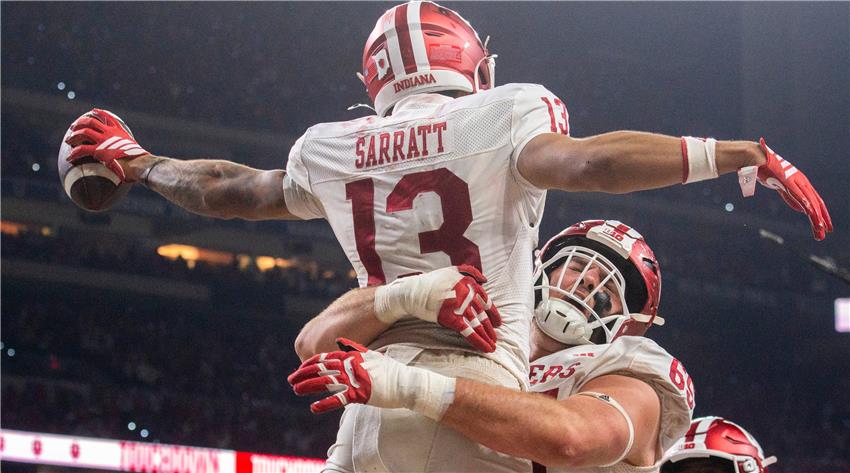
The confetti hadn't finished falling at Lucas Oil Stadium before the NFL Draft implications became crystal clear. Fernando Mendoza's heroic performance in Indiana's 13-10 Big Ten Championship victory over Ohio State wasn't just about securing the Hoosiers' first conference title in 58 years.
It was a statement that one of college football's historically weakest programs has transformed into a legitimate NFL talent factory.
Mendoza's clutch third-down conversion—a perfectly placed 33-yard strike to Charlie Becker with just over two minutes remaining—showcased the poise and accuracy that has NFL evaluators buzzing. His 88-yard touchdown drive in the third quarter, punctuated by completions of 51 and 17 yards, demonstrated the kind of pressure performance that translates directly to Sundays. With 2,980 passing yards and 33 touchdowns through 13 games, Mendoza has positioned himself as the heavy Heisman favorite and a rising quarterback prospect who has elevated his draft stock with each defining moment.
The magnitude of what Curt Cignetti has built in Bloomington extends far beyond wins and losses. Indiana's transformation from the losingest program in college football history to an undefeated Big Ten champion represents a seismic shift in the sport's landscape. More importantly for draft purposes, the Hoosiers have assembled one of the most NFL-ready rosters in college football.
Playoff Field Showcases Elite Quarterback Class for 2026 NFL Draft
The twelve-team College Football Playoff bracket reads like a who's who of future NFL signal-callers, with Championship Week performances solidifying draft positioning across the board. Julian Sayin entered the Big Ten title game as the nation's leader in completion percentage at 78.4 percent and passer rating among qualifying quarterbacks. Despite the loss to Indiana, Sayin's 258-yard, one-touchdown performance against the country's second-ranked defense demonstrated his ability to operate efficiently under pressure.
The Ohio State quarterback completed 21 of 29 passes and orchestrated two crucial red zone drives that came up just short against Indiana's suffocating defense. His 70-percent-plus completion rate in 11 games this season and meticulous ball security—rarely putting throws in harm's way—illustrate the kind of quarterback development that Ryan Day and Brian Hartline have mastered in Columbus. Sayin's conservative programming may frustrate fans seeking fireworks, but NFL teams covet quarterbacks who protect possessions while operating at elite efficiency levels.
Texas A&M's Marcel Reed presents a completely different archetype. With 2,932 passing yards, 25 touchdowns against just 10 interceptions, and 466 rushing yards, Reed embodies the modern dual-threat quarterback NFL offenses increasingly covet. His 50 explosive plays of 20-plus yards—44 passing and six rushing—and 8.0 yards per play average rank eighth nationally. The defining characteristic of Reed's game is his short memory, exemplified by his South Carolina performance where he rebounded from a disastrous first half to complete 16 of 20 passes for 298 yards and three touchdowns after the break.
Oklahoma's John Mateer arrived from Washington State and immediately provided the Sooners with the playmaking dimension their offense desperately needed. While Brent Venables' suffocating defense remains Oklahoma's calling card, Mateer's ability to create opportunities when structure breaks down has been critical in key victories over Tennessee and Alabama. His development through early-season injury challenges demonstrates the resilience NFL teams value in quarterback prospects.
Mendoza and Pavia Lead Unprecedented Group of 2025 Heisman Finalists
The announcement of the 2025 Heisman Trophy finalists confirms what draft analysts have known for months—this year's quarterback class features exceptional depth and diversity. Alongside Mendoza and Sayin, Vanderbilt's Diego Pavia and Notre Dame running back Jeremiyah Love will travel to New York for Saturday's ceremony.
Pavia's ascension mirrors the Johnny Manziel archetype of freestyling gunslingers who create chaos for opposing defenses. His 455.8 total yards of offense per game over Vanderbilt's final four contests, coupled with 16 touchdowns responsible for in that stretch, showcases elite playmaking ability. The 165 rushing yards on 8.3 yards per carry against Tennessee in the regular season finale demonstrated Pavia's game-breaking speed and elusiveness. For NFL teams seeking a quarterback who can extend plays and create off-script, Pavia offers tantalizing upside despite concerns about translating his improvisational style to structured pro offenses.
Love's inclusion among the finalists highlights Notre Dame's continued ability to develop elite running back talent. As one of the most gifted tailbacks to pass through South Bend in the modern era, Love represents the complete package of power, vision, and receiving ability that NFL teams covet in the backfield.
Big Ten Defensive Dominance Produces First-Round Edge Rushers
Indiana's defensive performance in the championship game provided the perfect showcase for a unit that ranks second in defensive SP-plus and third in points allowed per drive. The Hoosiers' ability to hold Ohio State scoreless for 40 minutes and eight seconds while twice turning away the Buckeyes inside the 10-yard line demonstrated championship-caliber execution at the point of attack.
Linebacker Rolijah Hardy's end zone pass deflection with 2:51 remaining to prevent the go-ahead touchdown crystallized Indiana's defensive mentality. The Hoosiers recorded five sacks against an Ohio State offensive line that had surrendered just six all regular season—a testament to defensive coordinator's game-planning and the talent level Indiana has assembled up front.
Caleb Downs continues to cement his status as one of the premier safety prospects in the country. The Ohio State transfer's range, instincts, and ball skills make him a projected first-round selection regardless of playoff results. His ability to impact games from the deep safety position while showing versatility in coverage assignments aligns perfectly with modern NFL defensive schemes that demand chess pieces rather than specialists.
Penn State's Dani Dennis-Sutton and Zane Durant headline a Nittany Lions defensive front that has produced NFL-caliber talent consistently despite the program's disappointing finish outside the playoff field. Dennis-Sutton's combination of length, motor, and pass-rush repertoire projects well to the next level, while Durant's interior presence and ability to collapse pockets make him an intriguing day-two prospect.
SEC Defensive Linemen Dominate Draft Boards After Championship Weekend
Georgia's 28-7 dismantling of Alabama in the SEC Championship Game showcased the kind of dominant defensive line play that defines championship-caliber teams. The Bulldogs allowed just 209 total yards and a microscopic 20 non-sack rushing yards, suffocating quarterback Ty Simpson and an Alabama offense that had averaged north of 30 points per game through most of the season.
The Bulldogs' defensive front, featuring Christen Miller, has allowed just 4.3 yards per play over Georgia's final four games while forcing three-and-outs at a 41-percent clip. Their ability to control the line of scrimmage without sacrificing gap integrity has been remarkable, allowing touchdowns on just 17 percent of red zone trips during this dominant stretch.
Alabama's defensive improvement throughout the season, despite the championship game setback, shouldn't be overlooked from a draft perspective. Edge rusher Yhonzae Pierre's 11.5 tackles for loss and six sacks demonstrate the explosive first-step quickness and bend around the edge that NFL teams covet. Safety Bray Hubbard's four interceptions and six pass breakups showcase the ball skills and instincts that translate immediately to the next level.
Texas A&M boasts the nation's best pass rush, with Cashius Howell leading a unit that ranks first nationally in sack rate at 11.4 percent. The Aggies' ability to generate pressure forces opponents into disadvantageous down-and-distance situations, where their third-down defense—the nation's best at allowing just 22-percent conversions—takes over. Howell's 11.5 sacks represent the kind of proven production that early-round edge prospects must demonstrate.
Texas Tech's Transfer Portal Triumph Creates Instant NFL-Ready Roster
The Red Raiders' ascension to a Big 12 championship and College Football Playoff berth represents college football's most dramatic single-season roster transformation. Texas Tech's strategic use of the transfer portal, combined with elite talent evaluation, has created one of the most NFL-ready defensive fronts in the country.
David Bailey, Romello Height, and Lee Hunter arrived via the portal and immediately earned first-team All-Big 12 recognition. Bailey ranks second nationally in sacks while Height places 16th, forming a pass-rush tandem that has terrorized opposing quarterbacks throughout the season. The Red Raiders' defensive line ranks third nationally in success rate allowed, third in yards per play allowed, and first in yards per carry allowed when removing sacks from the equation.
Linebacker Jacob Rodriguez has emerged as the nation's premier linebacker prospect. His sideline-to-sideline range, instincts in coverage, and ability to diagnose plays pre-snap make him a projected first-round selection. Fellow linebacker Ben Roberts' two interceptions and pass breakup in the Big 12 Championship Game—earning him MVP honors—demonstrate the versatility and playmaking ability that modern NFL defenses demand from their second-level defenders.
The Red Raiders' defensive dominance has been stunning. They've allowed more than two offensive touchdowns just once all season and have held opponents under 4.0 yards per play in eight of 13 games. For NFL scouts, Texas Tech's defense has become a treasure trove of prospects who have proven themselves against high-level competition in one of college football's most explosive offensive conferences.
Miami's Offensive Resurgence Features Elite Freshman Receiver
The Hurricanes' late-season offensive explosion, averaging 38 points per game over their final four contests, has been fueled by the emergence of freshman receiver Malachi Toney. With 84 receptions for 970 yards and a touchdown, plus 17 carries for 89 yards and a score, Toney has established himself as one of college football's most dynamic playmakers.
Miami's creative use of Toney in gadget plays and designed touches has become a direct message to the selection committee—and to NFL scouts. The freshman's versatility, route-running precision, and ability to create after the catch mirror the skill set that separates elite receiver prospects from merely good ones. Toney's two passing touchdowns further illustrate his football intelligence and willingness to embrace any role that helps his team win.
Quarterback Carson Beck's redemption arc will be one of the playoff's most compelling storylines. After throwing four interceptions in Miami's loss to Louisville and two more in the defeat to SMU, Beck has stabilized significantly. In Miami's 10 victories, his numbers tell the story of an elite quarterback: 83.1 Total QBR, 76-percent completion rate, 23 touchdown passes against just four interceptions. The turnover issues that plagued him late in 2024 at Georgia and cost him a playoff opportunity have largely been resolved, though the critical mistakes in both Miami losses demonstrate lingering concerns about decision-making in pressure situations.
The return of running back Mark Fletcher has provided the balance Miami's offense desperately needed. When the ground game functions efficiently and Beck operates as the director rather than the entirety of the offensive engine, the Hurricanes have been nearly unstoppable. For NFL evaluators, Beck's ability to manage an offense rather than single-handedly carry it represents a crucial developmental step.
Oregon's Balanced Attack Features Explosive Running Back Committee
The Ducks' 11-1 record and fifth-place playoff seeding reflect a roster construction philosophy that prioritizes depth and versatility. Oregon leads the nation in explosive plays of 20-plus yards at 10.4 percent while allowing such plays on just 3.3 percent of defensive snaps—the best mark in the country. This elite combination of offensive explosiveness and defensive big-play prevention creates multiple pathways to victory regardless of opponent or circumstance.
Quarterback Dante Moore represents Oregon's third different starting quarterback in three consecutive seasons, yet the Ducks rank fifth nationally in offensive success rate and fourth in overall SP-plus for the third straight year. This consistency despite quarterback turnover speaks to offensive coordinator's system and the talent level surrounding the position.
The running back room has been transformed by freshmen Dierre Hill Jr. and Jordan Davidson. Hill leads the team in yards per carry at 8.2 while Davidson leads in touchdowns with 13. Their emergence has been so pronounced that highly touted transfer Makhi Hughes opted to redshirt. For NFL scouts evaluating Oregon's offense, the running back committee demonstrates the kind of depth and production that creates matchup advantages at the next level.
Defensively, freshman Aaron Flowers has become a disruptive force in the secondary. His 53 tackles, two forced fumbles, one interception, and multiple pass breakups demonstrate the instincts and ball skills that project immediately to the NFL. Alongside established stars like linebacker Bryce Boettcher and edge rusher Matayo Uiagalelei, Flowers gives Oregon a secondary that can match up against the playoff field's elite passing attacks.
Ole Miss and Texas A&M Offensive Lines Feature Day-One Starters
The Rebels' offensive line has paved the way for running back Kewan Lacy's breakout season—1,279 rushing yards and 20 touchdowns. Lacy's emergence has provided the balance that quarterback Trinidad Chambliss needs to operate efficiently in the passing game. The connection between offensive line play and quarterback success has never been more evident than in Chambliss' transformation from Division II Ferris State to one of the SEC's most productive passers.
Chambliss became the first SEC player in 30 years to post three consecutive games with 300-plus passing yards and 50-plus rushing yards. His 359 passing yards and four touchdowns against Mississippi State in the regular season finale demonstrated the kind of arm talent and field vision that excites NFL evaluators. The uncertainty surrounding Lane Kiffin's departure creates questions about how Ole Miss will function in the playoff, but the talent level—particularly along the offensive line—remains elite regardless of coaching changes.
Texas A&M's offensive line has created the platform for the Aggies' balanced attack. The ability to generate push in the running game while providing clean pockets for Reed in the passing game has been instrumental in Texas A&M's 11-1 record. Chase Bisontis and the Aggies' offensive front have allowed A&M to control tempo and dictate matchups—critical advantages in playoff football.
Oklahoma Defense Features Elite Secondary Prospects
The Sooners' defensive identity under Brent Venables has become even more defined in 2025. Oklahoma ranks second in success rate allowed, third in stuff rate, third in sack rate, and fourth in three-and-out rate. The defensive unit has allowed 17 or fewer points eight times while maintaining elite big-play prevention metrics—allowing just 12.7 yards per successful play, far superior to other aggressive defenses in the playoff field.
Edge rusher R Mason Thomas missed Oklahoma's final three regular-season games with a quad injury, but his potential return for the playoff could be transformative. As the Sooners' sack leader over the previous two seasons, Thomas' 6-foot-2, 249-pound frame combines explosive first-step quickness with relentless motor—the foundation of successful NFL edge rushers.
The secondary has been equally impressive. Cornerbacks Courtland Guillory and Eli Bowen have allowed just a 38-percent completion rate in coverage while combining for two interceptions, 12 pass breakups, and only two touchdowns allowed all season. Their ability to play press-man coverage while maintaining leverage and staying in phase with receivers demonstrates the technique and discipline NFL teams demand from their cornerback prospects.
Oklahoma's defensive dominance has powered victories in hostile environments at Tennessee and Alabama—precisely the kind of résumé-building performances that elevate individual draft stocks. The Sooners' first-ever playoff home game against Alabama provides another opportunity for their defensive stars to showcase their abilities on the sport's biggest stage.
James Madison's Defensive Front Produces FCS-to-FBS Success Story
The Dukes' remarkable four-year journey from FCS playoffs to the College Football Playoff has been built on elite defensive line play. James Madison ranks first in success rate allowed at 29 percent and fourth in yards allowed per play at 4.1. The defensive front attacks relentlessly, understanding that occasional big-play surrenders will be offset by the flood of three-and-outs and turnovers their aggression generates.
Freshman defensive end Sahir West has emerged as a legitimate NFL prospect despite playing at the Group of Five level. His 14 tackles for loss lead the team, but his performance in the Sun Belt Championship Game—5.5 tackles for loss and three sacks against Troy—announced his arrival as a premier edge-rushing prospect. Eight different Dukes have recorded at least five tackles for loss, demonstrating the depth and production across the entire defensive front.
The secondary trio of Justin Eaglin, Elijah Culp, and Dylahn McKinney compares favorably to any cornerback group in the playoff field. Their ability to play press coverage while maintaining leverage and making plays on the ball has been critical to James Madison's defensive success. Against Louisville—the Dukes' only loss—James Madison held the Cardinals to just 264 total yards in a game that remained tied into the fourth quarter.
Tulane's Defensive Resurgence Features Elite Turnover Production
The Green Wave's November surge has been powered by defensive dominance. Tulane ranks sixth in turnover rate at 4.0 percent and 18th in tackles for loss per game at 7.0 since the start of November. The defense allows just 4.0 yards per carry excluding sacks—22nd nationally—while forcing opponents into obvious passing situations where quarterback mistakes become magnified.
Quarterback Jake Retzlaff has been Tulane's most consistent performer despite the team's occasional identity struggles. His five-of-17 passing performance for 56 yards against Ole Miss in September represents his floor, but his 230-plus passing yards in eight different games demonstrates the ceiling. Retzlaff's dual-threat capability—rushing for 50-plus yards seven times and topping 100 yards against both Northwestern and Duke—provides Jon Sumrall with offensive flexibility that will be crucial in the playoff.
The five-turnover performance in the American Championship Game against North Texas, including a defensive touchdown, showcased Tulane's ball-hawking mentality. For a Group of Five program competing against Power Four talent in the playoff, generating extra possessions through turnovers and winning the hidden yardage game becomes essential to pulling upsets.
Alabama Running Back Situation Creates Uncertainty for Playoff Run
The Crimson Tide's offensive struggles down the stretch have been exacerbated by running back Jam Miller's injury issues. Miller missed both the season opener against Florida State and the SEC Championship Game against Georgia—Alabama's two worst rushing performances of the season. In the championship game, the Tide finished with minus-three rushing yards, exposing the offensive line's struggles and removing any semblance of play-action credibility.
Miller's health heading into the playoff becomes critical for Alabama's offensive balance. Simpson has shown the ability to carry the offense when necessary, but asking him to win games entirely through the air against elite playoff defenses represents an unsustainable burden. The Tide's offensive line must establish some level of ground game competency, or Simpson's impressive season numbers—3,268 passing yards, 64-percent completion rate, 26 touchdowns against five interceptions—will be rendered moot by one-dimensional predictability.
Receiver Ryan Williams' disappearance over the final month raises additional concerns. After a promising start to his college career, Williams has been largely invisible when Alabama has needed him most. His inability to generate consistent separation or make contested catches has forced Simpson to look elsewhere, reducing the Tide's downfield threat capability precisely when playoff opponents will sell out to stop the underneath passing game.
Clemson's Playoff Absence Masks Elite Defensive Line Talent
Despite missing the College Football Playoff, Clemson's defensive line features multiple NFL prospects who deserve recognition. Peter Woods and DeMonte Capehart headline a Tigers defensive front that has maintained elite production despite the program's overall struggles. Woods' combination of size, athleticism, and pass-rush ability projects well to the next level, while Capehart's interior presence and ability to command double teams create opportunities for teammates.
Edge rusher T.J. Parker represents another Clemson defender whose draft stock remains high despite the team's disappointing season. His relentless motor, length, and ability to set the edge in the run game while generating pressure as a pass rusher demonstrate the versatility NFL teams demand from their edge defenders.
The Playoff Format Rewards Complete Teams Over One-Dimensional Powers
The twelve-team College Football Playoff bracket reflects college football's evolving reality—complete teams with balanced rosters and proven depth will advance, while one-dimensional powers face early exits. Indiana's defensive dominance combined with Mendoza's clutch playmaking exemplifies this trend. Ohio State's elite talent on both sides of the ball positions the Buckeyes as favorites despite the championship game setback.
Texas Tech's portal-fueled defensive transformation and Georgia's return to dominant defensive form demonstrate that championship-caliber defense remains the foundation of playoff success. Oregon's explosive offense paired with elite big-play prevention gives the Ducks multiple paths to victory. Miami's late-season balance and Texas A&M's suffocating pass rush provide both programs with legitimate championship credentials.
For NFL evaluators, the playoff provides the ultimate testing ground. Prospects will face the highest level of competition in the most pressure-packed environments. Defensive linemen will test themselves against elite offensive lines. Quarterbacks will operate against sophisticated defensive schemes that have spent weeks preparing specifically to stop them. Receivers will face blanket coverage from the nation's best cornerbacks.