
How Betting Markets Price the First Overall Pick (and Why They Still Get It Wrong)
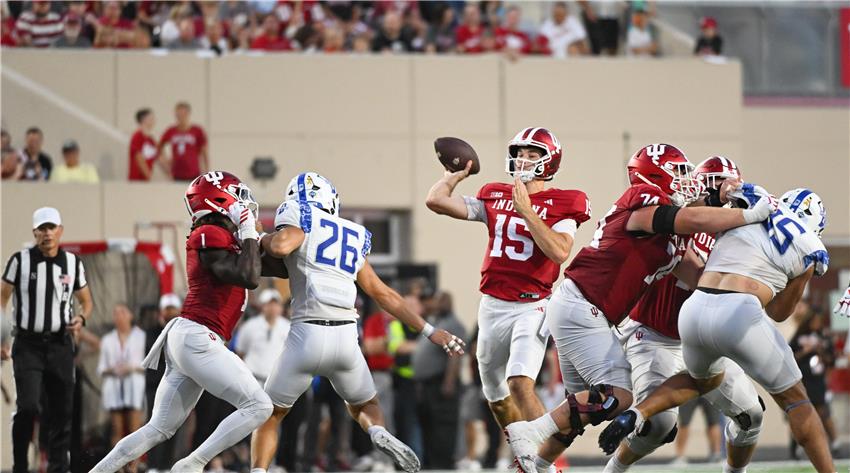
In September 2025, Fernando Mendoza was a +700 shot to go first overall. By December he was -180. By mid January, after Dante Moore announced his return to Oregon, the number collapsed to -7000, and in the week of the draft some books had the Indiana quarterback at -20000.
Bet $200 to win a dollar. The Raiders called his name first, the market took its victory lap, and on the surface it looked like the system worked exactly as designed.
That convergence is real, but it tells only half the story. Draft futures are one of the strangest betting markets in sports, and understanding why they sharpen at the top while staying soft everywhere else is worth your time whether you bet or just follow the draft.
A Market With 32 Insiders
Most betting markets price events nobody controls. A point spread reflects thousands of independent outcomes on the field. A draft pick reflects one decision made by one front office, and roughly 32 people in the world genuinely know which way it is leaning.
This is why the No. 1 pick market behaves so differently from picks two through ten. When the answer is obvious, as it was with Mendoza, the market simply tracks public consensus toward certainty. There is no edge to find because there is no real uncertainty to price. The 2026 board proved the point the moment the first card was in. Everything after Mendoza got chaotic, with trades, medical slides, and quarterbacks falling through the floor, and the futures markets on those picks were wrong far more often than they were right. A pick-by-pick grading of every team's 2026 class shows just how little of rounds one through seven the pre-draft consensus actually saw coming.
When the Market Eats Itself
The 2023 draft remains the definitive case study. In the days before the first round, a single unverified Reddit post claimed Will Levis was telling people Carolina would take him first overall. Money followed the rumor. His odds to go No. 1 went from +4000 to 4-1, and he overtook C.J. Stroud as the favorite to go second to Houston. CBS Sports tracked the surge in real time, with Levis jumping from +2500 to +550 for the top pick inside ten days.
Levis was drafted 33rd. Not second, not tenth. Thirty third, the second pick of round two, after a full night in the green room that became its own television subplot.
The lesson is not that bettors are fools. It is that draft futures are thin markets. A few thousand dollars of rumor-driven money can move a line that would not budge an inch on a Sunday afternoon spread. Books know this, which is why they shade numbers aggressively the moment anything moves, hedging against the possibility that the money knows something rather than the probability that it does.
The 2021 draft taught the same lesson from the opposite direction. Mac Jones spent weeks as the consensus betting favorite for San Francisco's pick at No. 3, fueled by media connections between Kyle Shanahan and the Alabama quarterback. The 49ers took Trey Lance. The market had priced a narrative, not information.
Where These Markets Actually Live
Here is something casual fans rarely realize: in much of the regulated US market, you cannot bet the draft at all. Several state regulators prohibit draft wagering outright because the outcome is decided by people rather than play, and picks can leak hours before the broadcast. States that do allow it tend to cap stakes at small amounts and pull markets the moment a line starts moving.
That pushes most serious draft betting volume elsewhere. According to Esports, offshore sportsbooks treat draft picks as a standard futures market alongside season win totals and championship odds, posting lines early and accepting the kind of position sizes that regulated books will not touch on this event. Reviewer Samantha Nguyen also notes those books are less likely to restrict bettors who win consistently, which matters in a market where the same handful of sharp draft analysts beat the closing number year after year.
The structural result is a two-tier market. The deepest liquidity and the earliest prices sit offshore, the regulated books copy those numbers with tighter limits, and the whole ecosystem reacts to the same drip of combine results, pro day workouts, and agent-planted smoke.
What the Sharps Do Differently
The bettors who consistently make money on the draft share a few habits worth borrowing even if you never place a wager.
They bet early. The best price on Mendoza was the +700 available in September, when he was one hot month into a season and the market had not yet processed where the worst teams would land in the order. By the time certainty arrives, the price is gone.
They fade rumor spikes. Any line that moves sharply in the 72 hours before the draft on no verifiable reporting is more likely to be noise than signal. Levis at 4-1 was free money for anyone willing to bet the other side of a Reddit post.
They treat team behavior as data. Pre-draft visits, private workouts, and trade-up chatter move lines, but front offices leak misinformation on purpose every April. The signal is in what teams do with draft capital, not what they say to reporters.
And they respect the limits of the whole exercise. A market where 32 people hold all the information will never be efficient in the way a game spread is efficient. That inefficiency cuts both ways. It creates the occasional Levis-sized blunder, and it creates the occasional September price on a future No. 1 pick that looks absurd in hindsight.
The draft will keep producing both. The market converged perfectly on Mendoza and missed badly on almost everything underneath him, which is about the most honest summary of draft futures you will ever get: right where it is easy, wrong where it counts.