
Indiana's Perfect Season Reshapes College Football Landscape as 2026 Contenders Emerge
The 2025 college football season concluded with one of the most improbable storylines in sports history.
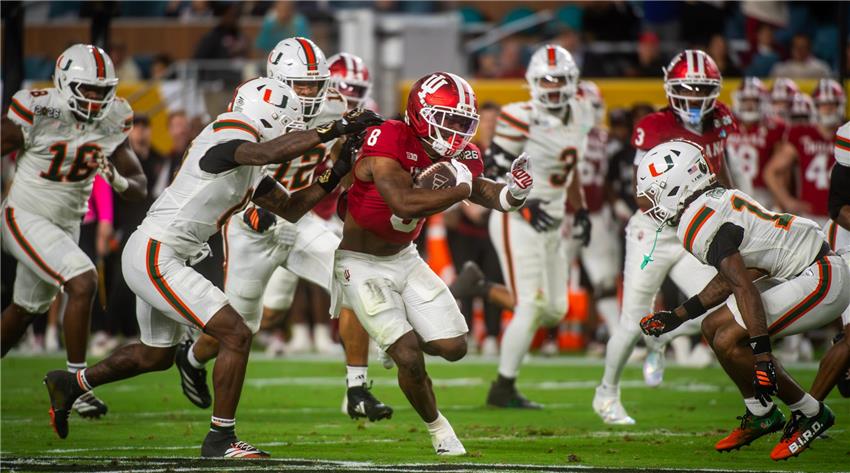
Indiana, the program that had accumulated more losses than any other in major college football history, completed a flawless 16-0 campaign and captured its first national championship. The Hoosiers defeated Miami 27-21 in the title game, capping a two-year transformation under head coach Curt Cignetti that will be discussed for generations. As the dust settles on that magical run, attention shifts to what comes next for programs across the country and the NFL Draft prospects who will shape the 2026 season.
The national championship game itself provided a fitting conclusion to a season filled with dramatic moments. Fernando Mendoza, who won the Heisman Trophy after transferring from California, delivered the decisive blow with a fourth-down touchdown run that epitomized Indiana's never-say-die mentality. Trailing by three points and facing fourth-and-four from the Miami 12-yard line early in the fourth quarter, Cignetti called his number. Mendoza pushed up the middle, absorbed contact, and stretched across the goal line to extend the lead to 10 points. That moment captured everything that made this Indiana team special: a coach willing to bet on his players and a quarterback who delivered when the lights shone brightest.
The Cignetti Blueprint and What It Means for College Football
Indiana's championship run stands as proof that the landscape of college football has fundamentally changed. When Cignetti was hired in 2023, the Hoosiers had been college football's doormat for decades. Yet within two years, they had transformed into national champions. The formula was equal parts roster construction and cultural installation. Cignetti valued character and production over recruiting rankings, bringing 23 people from James Madison who had either coached or played for him. The transfer portal became his primary recruiting ground, and he maximized every acquisition.
The defensive playmakers who sealed the title exemplified this approach. Cornerback D'Angelo Ponds recorded five solo tackles and three pass breakups in the championship game, while defensive end Mikail Kamara blocked a punt that was recovered for a touchdown. Both came to Bloomington from James Madison as part of the Cignetti migration. Mendoza himself arrived from California as an overlooked recruit who had originally committed to Yale before a late offer changed his trajectory.
The significance extends beyond Indiana. Programs across the country now see a path to relevance they never imagined possible. Investment levels have risen, and the combination of NIL and the transfer portal has created a more competitive environment. Indiana's success proves that smart hiring decisions and aggressive roster building can yield immediate results. Whether anyone can replicate what Cignetti accomplished remains to be seen, but the template now exists.
Miami's Heartbreak and the Road Ahead
For Miami, the championship game defeat stings particularly hard because the Hurricanes had already overcome so much to reach that stage. After three straight road trips and two upsets during the playoff, including an exhausting semifinal victory over Ole Miss in Arizona, Miami faced the expectations of a home crowd at Hard Rock Stadium. The first half was a struggle, with the Hurricanes being outgained by 100 yards and appearing headed for a blowout.
But this Miami team, built on resilience throughout its run to the College Football Playoff, responded with a furious second-half rally. Running back Mark Fletcher Jr. sparked the comeback with a 57-yard touchdown burst in the third quarter and finished with 112 rushing yards on the night. Receiver Malachi Toney caught 10 passes for 122 yards, including a 22-yard touchdown on a jet sweep that cut Indiana's lead to three points with under seven minutes remaining. The pass-rushing tandem of Rueben Bain Jr. and Akheem Mesidor combined for three sacks after halftime and finished with 4.5 tackles for loss.
The loss ultimately came down to a late interception by quarterback Carson Beck, who had transferred from Georgia seeking a fresh start and a chance to lead a championship program. Beck's tenure as a one-year starter will be remembered with conflicting emotions. He produced some fantastic moments, including an all-timer of a go-ahead touchdown drive to beat Ole Miss in the semifinals, but all three of Miami's losses this season ended with a Beck interception. Jamari Sharpe, the nephew of Glenn Sharpe who was flagged for a controversial pass interference in the 2002 national championship game between Miami and Ohio State, made the decisive pick to seal Indiana's victory.
Miami will look dramatically different in 2026. Losing Bain and Mesidor from the defensive line, along with linebackers Mohamed Toure and Wesley Bissainthe, means defensive coordinator Corey Hetherman must rebuild. The quarterback position requires attention as well, though reports indicate the Hurricanes are expected to land Duke transfer Darian Mensah. Fletcher and Toney return, providing offensive continuity, and head coach Mario Cristobal continues to recruit at an elite level. The program has reawakened, and while the championship slipped away, the foundation for sustained success appears solid.
Ohio State Returns Loaded for Another Title Run
The Buckeyes enter 2026 as the consensus preseason favorite to win the national championship. The reason is simple: quarterback Julian Sayin, the nation's most accurate passer last season, returns alongside receiver Jeremiah Smith, widely considered the best player in college football. That combination alone justifies Ohio State's position atop early rankings.
The roster remains stacked with talent despite normal attrition. Defensive coordinator Matt Patricia proved himself elite in his first season, transforming the unit into one of the nation's best. Eight defenders arrived via a top-five portal class to reload the depth. Ohio State's championship window remains wide open, and expectations in Columbus will be nothing short of a title.
The Buckeyes host Texas in the second week of the season in what projects as the early-season marquee matchup. That game could determine playoff seeding and conference championship positioning for both programs.
Texas Builds Around Arch Manning's Development
The narrative surrounding Arch Manning shifted dramatically over the course of the 2025 season. After a rough September that fueled doubters, the former five-star recruit began to look more comfortable in the Texas offense and improved seemingly by the week. He closed the year on fire with 14 touchdowns against just two interceptions over his final six games, showing the dual-threat ability that made him the top overall recruit in his class.
Texas added significant pieces through the transfer portal to support Manning's development. Auburn receiver Cam Coleman joins an already talented receiving corps, while running backs Hollywood Smothers and Raleek Brown bolster the backfield. The offense projects as one of the most explosive in the country.
Manning enters 2026 as a legitimate Heisman Trophy contender with +850 odds, second only to Notre Dame quarterback CJ Carr. The fatigue around Manning hype will be real this offseason as skeptics hesitate to buy back in, but the reality is that the Longhorns' quarterback is rounding into form. With a year of experience under his belt, he appears primed to lead one of college football's most talented offenses.
Oregon's Dante Moore Bucks Draft Trends
One of the most significant offseason developments came when Dante Moore announced his decision to return to Oregon rather than enter the NFL Draft. The move shocked many considering Moore's first-round projection and the generally accepted wisdom that highly-rated quarterbacks should capitalize on their draft stock.
Oregon now boasts arguably the best quarterback room in college football. Moore returns as the starter with Nebraska transfer Dylan Raiola as his backup. The Ducks were relatively young last season, meaning this squad should be better by default. The question becomes how head coach Dan Lanning adjusts after losing both coordinators to Power Four head-coaching positions.
Moore's return gives Oregon a legitimate shot at reaching the playoff once again. His Heisman odds sit at +1100, tied with Sayin and others as a primary contender. History suggests that experienced quarterbacks who return to school often produce their best seasons, and Moore has both the talent and the supporting cast to make a serious run at the trophy.
Georgia Seeks Return to CFP Glory
Georgia has not won a College Football Playoff game since smothering TCU to claim the national championship, and though the Bulldogs have captured consecutive SEC titles in that span, the fanbase is itching for a return to the promised land. Head coach Kirby Smart remains a master coach, and the offense should take a step forward with quarterback Gunner Stockton returning and running back Nate Frazier in the backfield.
The defensive concerns linger, however. Georgia struggled to generate pressure last season, ranking 122nd nationally in tackles for loss. Several starters return in the front seven, providing hope for improvement, but the unit must find a higher gear to compete with the nation's elite.
Stockton enters the Heisman conversation at +1300 odds after a season where he flashed potential despite inconsistent surrounding talent. With more experienced receivers joining the fold, Georgia's offense may finally step up to complement what has traditionally been an elite defense.
Transfer Portal Quarterbacks Who Could Define 2026
The transfer portal continues to reshape college football rosters, and the quarterback position has been particularly volatile. Several signal-callers found new homes that could elevate their careers and NFL Draft stock.
Sam Leavitt followed Lane Kiffin to LSU after a breakthrough season at Arizona State. The move puts him in one of the nation's most QB-friendly systems with elite coaching and resources. His Heisman odds of +1300 reflect the offensive potential Kiffin will unlock. LSU remains in transition after the coaching change, but Leavitt gives the Tigers a proven commodity at the most important position.
Brendan Sorsby landed at Texas Tech after starting at Cincinnati, joining a program coming off a Big 12 championship. The Red Raiders signed the nation's eighth-ranked portal class, and Sorsby represents the marquee addition. His Heisman odds of +2500 could prove to be a bargain if he clicks with the offensive system that propelled Texas Tech to conference supremacy.
Indiana itself replaced Mendoza with TCU transfer Josh Hoover, the nation's leading passer. Cignetti has now utilized a different transfer quarterback for three consecutive seasons, each time producing exceptional results. Hoover's Heisman odds of +1100 reflect both his statistical profile and the system he enters.
Big Ten Emerges as College Football's Premier Conference
Indiana's championship cemented the Big Ten's status as the dominant conference in college football. The league placed multiple teams in the playoff and produced the national champion, outpacing the SEC in the sport's most important metric. The conference will enter 2026 with legitimate title contenders scattered across its membership.
Michigan underwent a major transition with the hiring of Kyle Whittingham from Utah. The move brought immediate excitement, particularly with offensive coordinator Jason Beck installing his uptempo attack. Quarterback Bryce Underwood, a former five-star recruit, should thrive in the new system. The Wolverines could be the surprise team in the conference.
Penn State hired Matt Campbell from Iowa State to rebuild after James Franklin's departure. Campbell brought quarterback Rocco Becht with him, providing familiarity in the transition. The Nittany Lions remain talented despite significant roster turnover, and Campbell's track record suggests they will compete immediately.
Defensive Prospects to Watch in 2026
While offensive players typically dominate Heisman conversations and national attention, several defensive prospects will enter 2026 with legitimate NFL Draft buzz. These players performed at elite levels last season and project as potential first-round selections.
The defensive line talent across college football remains exceptional. Players who created consistent pressure and disrupted opposing offenses will continue developing their games with professional scouts watching closely. Edge rushers and interior defensive linemen who can collapse the pocket command premium draft capital, making their performances particularly noteworthy.
In the secondary, cornerbacks and safeties who combined ball production with reliable coverage skills stand out. The NFL's emphasis on passing offense has elevated the importance of coverage talent, creating additional opportunities for college defensive backs to showcase their abilities.
The Coaching Carousel Reshapes Programs
A record-setting coaching carousel saw 32 new head coaches hired across the country, igniting another round of transfer portal turbulence before the winter window closed. These changes will define several programs for years to come.
Virginia Tech hired James Franklin, who brought 12 players from Penn State and added Duke receiver Que'Sean Brown. In the wide-open ACC, Franklin's track record suggests the Hokies could become competitive immediately. The hire ranks among the best of the cycle.
Houston under Willie Fritz emerged as a potential dark horse. Fritz turned Tulane around before leading Houston to 10 wins in only its second season as a power conference team. The additions of Oregon defensive lineman Ashton Porter and running back Makhi Hughes, who starred at Tulane under Fritz, strengthen the roster considerably.