
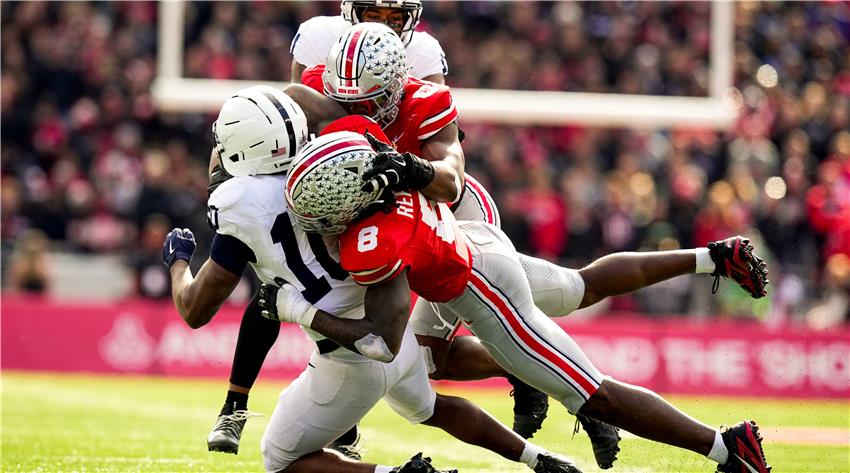
The NFL Draft Is a Year-Round Information Business
For fans, draft season can feel like a rush of mock drafts, prospect rankings and breaking news compressed into a few intense weeks. But the work behind that coverage starts much earlier. A useful draft report may draw on months of watching games, checking measurements, comparing roles and explaining how a prospect might fit a professional roster. Understanding that process can help readers separate thoughtful analysis from the constant churn of predictions.
It also reveals why draft coverage has become a year-round publishing effort. College football supplies new evidence every weekend, while injuries, coaching changes and shifting team needs keep changing the questions. A prospect’s evaluation is not just a grade attached to a name; it is a developing argument that readers should be able to follow.
Good evaluation begins with a clear question
Scouting discussion gets more useful when it moves beyond broad labels such as “raw,” “high upside” or “pro ready.” What does the player do well? Against what kind of competition? Which parts of the job appear repeatable, and which depend on a favorable scheme or matchup?
For a quarterback, that might mean separating arm strength from processing speed and asking how often he identifies pressure before the snap. For a cornerback, it could mean looking at how he handles route breaks, not simply counting interceptions. Context matters: a player asked to do one thing in college may be projected to perform a different role in the NFL.
Readers can use the same questions when comparing analysts. Look for specific plays, film-based reasoning and a fair account of uncertainty. A confident prediction is not automatically a strong evaluation. The best work explains what would need to happen for a projection to succeed—and what could make it fail.
Why draft coverage takes a team
Even a small football publication has several jobs to balance. Someone watches games and tracks prospects. Someone else edits copy, prepares graphics, maintains the website and shares stories with readers. During the season, breaking news can disrupt the publishing plan; near draft weekend, the pace can become difficult for a lean staff to manage alone.
That is why many independent publishers plan their coverage as a collection of repeatable tasks rather than one long sprint. A prospect database, a consistent grading rubric and a calendar of key college games make it easier to keep notes current. Templates can help with routine details, leaving writers more time to explain what distinguishes one player from another.
Promotion also takes judgment. A site seeking new readers may explore relevant editorial partnerships or guest contributions, but a link is only useful when it leads people to information they actually want. Services such as iCopify operate in the content placement and link-building space; publishers still need to decide whether a proposed placement fits their subject, audience and editorial standards. More exposure is not a substitute for reporting that deserves attention.
Use outside help for defined jobs
Freelancers can be useful when a publication has a specific shortfall. A designer might build a clean chart comparing a class of receivers. An editor could help tighten a long scouting feature. A video specialist might turn permitted footage and original analysis into a clear explainer. The key is to define the deliverable before bringing someone in: audience, format, deadline, revision expectations and who owns the finished work.
A general freelance marketplace can help publishers find people for tasks beyond writing. Osdire, for example, lists services across fields such as design, programming, writing, video and marketing. A buyer should still review samples, agree on scope and confirm that the freelancer understands any rights or usage requirements. In football media, that includes being careful with team logos, broadcast footage and other copyrighted material.
Outsourcing does not remove the need for editorial oversight. A freelancer may be excellent at visual presentation but unfamiliar with the terminology of a particular defensive scheme. The publication should supply accurate source material, check names and statistics, and make sure the final piece reflects its own standards. Clear instructions protect both sides from avoidable revisions.
What readers should expect
Draft coverage is strongest when it distinguishes observation from projection. A writer can describe what happened on film, then explain how that evidence might translate to a different level of competition. Those are related steps, but they are not the same. Honest analysis says where the evidence is thin and updates a view when new information changes the picture.
Readers can also benefit from comparing evaluations rather than searching for a single definitive ranking. Disagreement may reveal different assumptions about scheme, development time or positional value. If two analysts see the same player differently, the important question is why—and which evidence supports each case.
The draft will always invite predictions, and that uncertainty is part of its appeal. Better coverage does not eliminate surprises. It gives fans enough context to understand why a team made a choice, what role a newcomer might fill and which questions remain unanswered. That is a more durable service than simply guessing the next pick.