
The NFL Draft Prospects Trapped by Their Own Highlight Reels
A great college football highlight travels fast. One-handed catches, 60-yard throws and tackles that send helmets rolling across the field can turn a prospect into a familiar name before most people have watched an entire game. The trouble begins when one spectacular play becomes the scouting report.
Highlights show what a player is capable of doing. They rarely show how often he does it, what happened on the previous snap or whether the scheme created most of the opportunity. For several leading 2027 NFL Draft prospects, the biggest challenge may be separating genuine ability from the expectations built around their most replayed moments.
Jeremiah Smith Has to Win the Ordinary Routes Too
Jeremiah Smith already has the kind of receiving highlights that require very little explanation. His size, body control and ability at the catch point are obvious when he climbs over a defensive back or adjusts to a ball that appears destined for the sideline.
NFL evaluators will still spend plenty of time studying the catches nobody uploads. They’ll want to see whether Smith creates separation on routine third-down routes, adjusts his pacing against zone coverage and maintains his effort when the play is designed for someone else.
Contested catches are valuable, but regularly needing to make them can raise another question. Was the defender beaten, or did Smith have to rescue a route that never created enough space? His release against press coverage, footwork at the top of the route and understanding of leverage will tell scouts whether his game can remain efficient against NFL cornerbacks.
Arch Manning’s Deep Ball Can Hide the Harder Work
Few quarterback clips spread faster than a deep completion. The pocket holds, the receiver gets behind the secondary and Arch Manning places the ball where only his teammate can reach it. Scouts will appreciate the arm talent, but they won’t need a replay to confirm that it exists.
The harder evaluation happens between those throws as Manning must identify pressure, work through progressions and remain technically sound when the first read disappears. A five-yard completion to the checkdown can reveal more about his processing than a long touchdown against busted coverage.
Completion percentage needs some context as screens and quick throws can make a quarterback appear highly accurate without asking him to anticipate windows over the middle. Conversely, a sensible throwaway lowers the number while protecting the offense from a sack or turnover.
The same distinction is useful when making sports betting picks during the college season. A quarterback’s latest highlight may shape public expectations, but protection, opponent quality, weather and defensive coverage provide a firmer basis for assessing the next game. One extraordinary play doesn’t make every difficult throw repeatable.
Evaluators will be especially interested in Manning after mistakes. His response to an interception, missed read or early sack may show whether he can stabilize the offense rather than trying to repair everything with one ambitious throw.
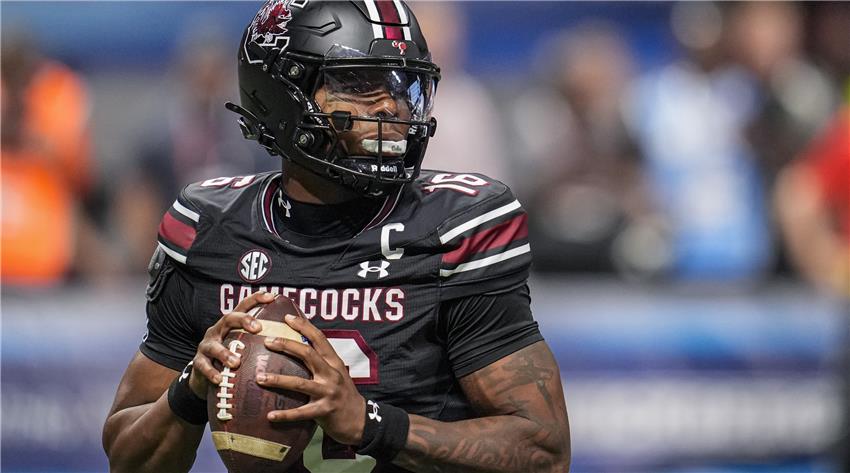
LaNorris Sellers Is More Than a Collection of Broken Tackles
LaNorris Sellers can produce the sort of quarterback runs that seem to contain three separate plays. A defender reaches him in the backfield, another closes from the side and Sellers still emerges with the ball and several extra yards.
His size and strength make him difficult to bring down, but NFL teams won’t want designed chaos to become the foundation of their offense. They’ll study when he chooses to scramble, whether he keeps his eyes downfield and how well he protects himself once the pocket collapses.
Escaping pressure isn’t the same as managing it. A quarterback can turn a likely sack into a memorable gain while overlooking an open receiver who would’ve moved the chains without the additional drama. Sellers’ development as a pocket passer will depend on making the easier answer part of his game.
His passing mechanics can also change when he’s hurried. Scouts will examine whether his base narrows, his release becomes rushed or his accuracy drops when he can’t step comfortably into the throw. None of that diminishes his running ability. Physical talent raises his ceiling; repeatable decision-making will influence how confidently a team projects him.
Big Defensive Plays Can Distract From Defensive Discipline
Defensive highlights are particularly convincing because disruption is easy to recognize. Colin Simmons beating a tackle around the edge or a safety such as Jelani McDonald arriving with force can make the evaluation feel complete. It isn’t.
Simmons’ first step gives blockers an immediate problem, but scouts will examine how he attacks when a tackle begins protecting the outside. He’ll need an inside counter, an effective conversion from speed to power and enough discipline to avoid running beyond the quarterback.
Run defense may offer the more revealing snaps. Holding the edge, separating from a blocker and forcing the runner back inside can help the defense without producing a sack or tackle. Chasing the ball too aggressively may create an impressive collision one week and a wide-open cutback lane the next.
McDonald faces a similar balance at safety. A heavy hit can energize a defense, but arriving under control is more dependable than launching towards the ball carrier. Tackling angles, coverage communication and recognition before the snap will carry greater weight than one perfectly timed collision.
The lesson we learn from this is that highlight reels aren’t dishonest; they’re simply incomplete. The 2027 class won’t be judged by its best 20 plays. Its future will be shaped by everything that happened between them.