
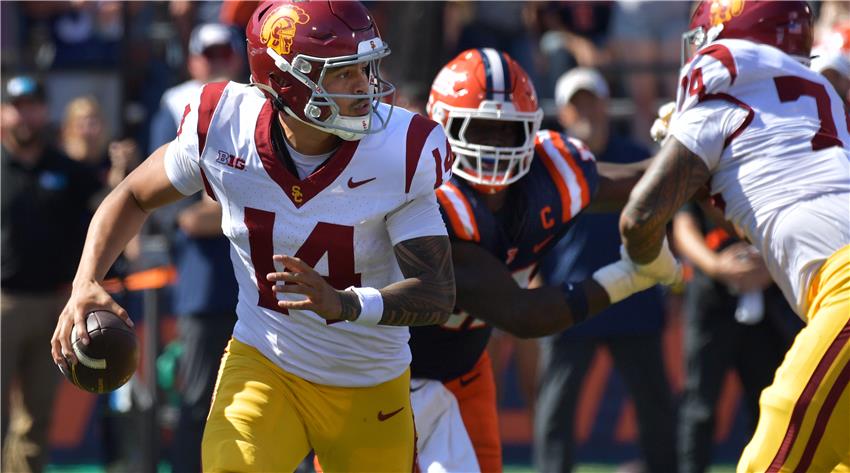
The 2027 NFL Draft Market Already Has Its Pressure Points
The 2027 NFL Draft will take place in Washington, D.C., with the National Mall and Pennsylvania Avenue serving as the backdrop for three days of roster triage.
The position market already has a shape, even before the 2026 college season sorts real risers from summer-board noise. Quarterback, offensive tackle, edge rusher, cornerback, and wide receiver sit at the top of the demand stack. The order will depend on which NFL teams fall apart by December, but the logic is familiar: protect the passer, find the passer, hit the passer, and cover the receivers who keep getting bigger. One bad Sunday changes a front office’s mood.
Quarterbacks Will Drive the First Round Again
Quarterback demand never sleeps, and the 2027 class has enough names to keep scouting departments busy from Week 1. Arch Manning at Texas and Dante Moore at Oregon already sit near the top of early national boards, while Sam Leavitt at LSU, Julian Sayin at Ohio State, CJ Carr at Notre Dame, and LaNorris Sellers at South Carolina give the class a long second layer. Teams that missed on veterans in 2025 or chose temporary starters in 2026 will watch third-down tape first, not highlight throws. Betting markets will follow that attention, and downloading MelBet (Arabic: تنزيل ميل بيت) can fit into an adult draft-season routine as fans compare odds, quarterback landing spots, and team win projections after the combine. The sharper evaluation still comes from pressure reps: backside blitz pickup, red-zone timing, and whether a quarterback throws hot before the free rusher arrives. Manning’s name will pull the cameras, but Moore’s accuracy and Leavitt’s LSU reset under Lane Kiffin could shape the board just as much.
Tackles Will Get Paid Before Guards Get Called
Offensive tackle is usually the next position teams focus on after quarterback. Franchises are always looking for players who can hold up in pass protection and give offenses more flexibility downfield. Jordan Seaton’s move from Colorado to LSU puts a lot of attention on him as one of the top tackles to watch in the 2027 class, and he’ll be judged the same way every elite prospect is: by how consistently he handles top-tier edge rushers.
Small observation: NFL teams now grade tackles less by pancake blocks and more by how often the quarterback can hitch once at 2.7 seconds without feeling color flash across his front hip. That is where Seaton’s SEC tape will matter. A tackle who survives speed-to-power against Alabama or Georgia is no longer just a prospect; he becomes a financial plan for a rookie quarterback.
Edge Rushers Still Own the Cleanest Draft Math
The edge market stayed strong in 2026. NFL.com’s draft tracker had David Bailey going No. 2 overall to the Jets and Arvell Reese landing with the Giants at No. 5. That kind of investment in pass rushers is unlikely to slow down in 2027. Texas standout Colin Simmons is already drawing plenty of attention thanks to his ability to generate pressure and his productive finish to the season, while South Carolina’s Dylan Stewart has emerged as another defender many evaluators see as a potential first-round talent. The appeal goes beyond raw athleticism. Teams are looking for edge defenders who can win off the corner on passing downs, hold up against the run, and make life uncomfortable for quarterbacks before plays have a chance to develop. Consistent pressure remains one of the most valuable traits in the league.
Corners Are Back in the Premium Lane
Cornerback demand isn't going anywhere. Modern NFL offenses make life difficult for defenses with bigger slot receivers, constant motion, condensed formations, and quick RPO concepts. Teams need corners who can hold up in run support while still having the speed to stay with receivers downfield. Notre Dame's Leonard Moore is one of the early names to watch after recording seven interceptions, 18 pass breakups, and three forced fumbles over his first two seasons. Georgia's Ellis Robinson IV is another player drawing attention, with strong reviews from spring practices and praise for his ball skills. The 2026 draft was another reminder of how much teams value the position: Mansoor Delane went sixth overall to Kansas City, showing that elite cornerbacks continue to carry premium draft value.
Receivers Will Not Wait Long If Smith Holds Form
Wide receiver may not outrank quarterback or tackle in team-need math, but Jeremiah Smith can bend a draft board by himself. The Ohio State standout put up 1,243 receiving yards and 12 touchdowns last season, and it didn’t take long for early 2027 mock drafts to start placing him near the top of the class. What makes him so appealing is how many different ways he can be used. He’s comfortable lining up outside, moving into the slot, working underneath in the quick passing game, and turning short catches into big gains. As the season unfolds and more information becomes available, the parimatch app may surface draft-related conversations on topics like potential landing spots, draft position projections, and other long-term outlooks. The better read is to track target share against ranked opponents, red-zone usage, and how often defenses roll coverage toward Smith before the snap. If he keeps beating bracket looks in October, receiver demand will stop sounding like a secondary priority.
The Interior Positions Need the Right Team Fit
Interior defensive line, safety, tight end, and linebacker will produce first-round players, but demand usually depends more on scheme and roster hole than league-wide desperation. A disruptive three-technique who wins on second down can still jump into the top 20, especially if he gives a coordinator pass rush without blitzing. A tight end with Trey’Dez Green’s size profile at LSU will attract attention if he blocks well enough to keep 12 personnel honest. Safeties and linebackers must fight positional economics, even when the tape is clean. The lesson from recent drafts is blunt: the league loves complete players, but it overpays for scarce jobs. Quarterback, tackle, edge, corner, and true WR1 still carry the oxygen.