
Why The 2027 Quarterback Class Headlined By Julian Sayin And Dante Moore Could Reset The NFL Draft Conversation
The 2027 NFL Draft quarterback class has crystallized around Julian Sayin and Dante Moore in a way that few classes do this early in the evaluation cycle, with both prospects demonstrating specific traits that translate directly to professional success rather than relying on the projection-heavy profiles that often dominate top quarterback discussions.
Sayin enters the conversation as the consensus top quarterback with a 92.0 rating and a profile built on accuracy, processing speed, and release mechanics that scouts describe as unusually clean for a college quarterback at this stage of his development. Moore counters with what evaluators consistently identify as the best pure passing ability in the class, supported by physical measurables at six-foot-three that give him the durability and pocket presence that NFL teams increasingly prioritize when projecting franchise quarterback potential.
For context on how data-driven evaluation has reshaped prospect analysis across competitive prediction markets, research published by coinflip gambling on user prediction patterns across high-stakes selection scenarios documented that participants who systematically weighted accuracy metrics over peak highlight performance consistently outperformed those relying primarily on viral plays, a finding that maps directly onto the analytical frameworks that contemporary NFL scouting departments now apply when separating projection-based prospects from production-based ones in the early stages of draft evaluation.
What Makes Julian Sayin's Profile Different From Recent Top Quarterbacks
Julian Sayin's number one ranking reflects an evaluation framework that prioritizes the traits NFL teams have learned matter most through years of expensive lessons about quarterbacks who looked great in college but failed to translate. His accuracy across all three levels of the field, his processing speed against pre-snap and post-snap defensive disguises, and the mechanical efficiency of his release combine to produce film that reduces the speculation typically required when projecting college quarterbacks to professional contexts.
The Ohio State system that Sayin operates within provides additional context that strengthens his projection. The Buckeyes consistently produce quarterbacks who face NFL-level defensive complexity, work with NFL-trajectory receivers, and execute concepts that translate directly to professional offensive systems. Sayin has performed well against this elevated context, which provides scouts with confidence that the production reflects genuine ability rather than competitive mismatches that inflate weaker prospects' statistics.
The specific concern that limits Sayin's evaluation involves his physical dimensions at six-foot-one and 208 pounds, which place him at the lower threshold of what NFL teams typically prefer for franchise quarterback projections. The historical record shows that quarterbacks at this size can succeed at the highest level, but they typically require specific environmental conditions including strong offensive line play, system designs that maximize their accuracy advantages, and coaching staffs willing to adapt scheme to maximize the prospect's strengths rather than forcing him into traditional pocket quarterback molds.
Mel Kiper Jr., who has evaluated quarterbacks across multiple generations of NFL Drafts, has spoken in recent media appearances about how the modern game has reduced but not eliminated the size premium that historically constrained quarterbacks like Sayin. His analysis suggests that the evaluation framework should emphasize the trait combination over any individual measurement, which aligns with how the most successful contemporary teams approach quarterback evaluation.
Dante Moore's Pure Passing Excellence
Dante Moore presents a different profile that emphasizes traditional quarterback excellence in ways that resonate with evaluators who prefer prospects with prototypical physical attributes. His six-foot-three frame at 206 pounds provides the size advantages that NFL teams have historically valued. His pure passing ability, which scouts consistently rank as the best in the class, demonstrates the mechanical and conceptual mastery that distinguishes franchise quarterback projections from developmental projects.
Moore's Oregon context shapes his evaluation in important ways. The Ducks program has produced multiple successful NFL quarterbacks across recent decades, including some who have reached elite levels in the professional game. The coaching infrastructure, the offensive system sophistication, and the talent pipeline that surrounds Oregon quarterbacks all contribute to producing prospects who arrive at the professional level with development trajectories that justify high draft investment.
The specific question that surrounds Moore involves his 4.90 forty time, which places him in the slower athletic category for modern NFL quarterback prospects. Contemporary professional offenses increasingly rely on quarterback mobility to extend plays, escape pressure, and create explosive opportunities through designed quarterback runs. Moore's profile suggests he will need to win primarily from the pocket, which can succeed at the NFL level but requires specific scheme fit and offensive line investment to maximize his pure passing abilities effectively.
Arch Manning And The Texas Quarterback Question
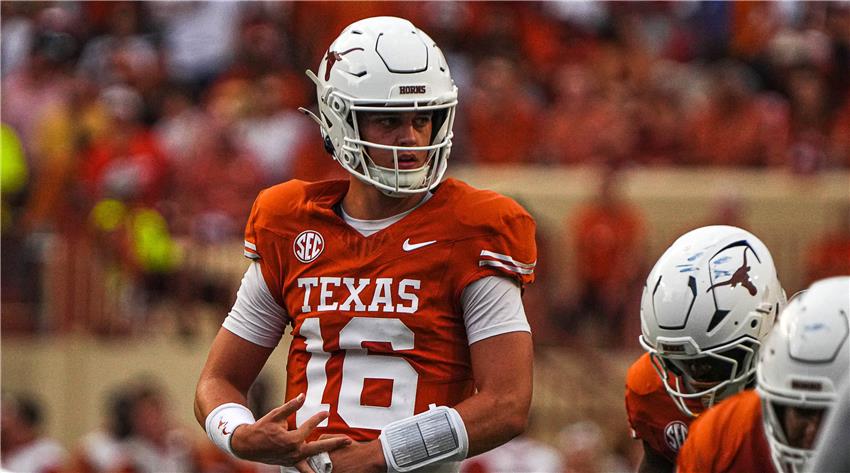
Arch Manning sitting at the sixth overall ranking with an 89.4 rating represents perhaps the most discussed quarterback prospect in recent draft history due to the family legacy that surrounds his evaluation. The Manning name carries enormous weight in NFL evaluation circles, both as positive marker indicating quarterback bloodlines that have produced multiple Hall of Fame players and as a complicating factor that makes objective evaluation harder than for prospects who lack such loaded context.
The specific scouting questions surrounding Manning involve how to weight his physical tools, his developmental trajectory under Sark at Texas, and his actual production against the elevated expectations that his family name creates. Scouts attempting to evaluate Manning purely on his film and production sometimes struggle to separate what they are seeing from what they expect to see based on the family context. This evaluation challenge creates real differences of opinion across NFL scouting departments that will likely produce significant draft day variance.
The Texas system that Manning operates within provides both opportunities and challenges for his projection. The Longhorns play in the SEC, which exposes him to professional-caliber defenses on a regular basis. The offensive talent surrounding him allows him to demonstrate distribution and decision-making against pressure that lesser programs cannot replicate. At the same time, the system support reduces the degree to which his individual brilliance must carry the offense, which can mask developmental gaps that less talented surrounding casts would expose more clearly.
The Running Back Position Becomes Less Important Than Ever
Nate Frazier topping the running back rankings at Georgia with an 89.0 rating, followed by Ahmad Hardy at Missouri with 86.5, illustrates how the running back position continues to be evaluated within the contemporary NFL framework that has devalued the position substantially across the past decade. Both prospects show clear NFL-level skills, but the question facing every NFL team evaluating running backs is whether to invest premium draft capital in a position where the return on investment has consistently disappointed across the past several drafts.
Frazier's 4.35 forty time provides the athletic foundation that justifies higher draft consideration, with the speed combined with the ability to run hard between the tackles representing the rare profile that NFL teams will pay for at the position. His 5-foot-10 frame at 210 pounds creates the durability question that affects most running backs at the next level, but his specific combination of physical tools and tape production justifies the elite ranking he has earned among 2027 running back prospects.
Hardy's profile as a lead back walking into the league represents the kind of player NFL teams have learned to value in the middle rounds rather than reach for in the first round. His tape against Louisiana and Mississippi State shows the qualities that translate to NFL production, but the running back position's overall devaluation in modern roster construction makes him unlikely to push into the top tier of overall draft consideration despite legitimate position-specific excellence.
The Wide Receiver Position Maintains Premium Status
Jeremiah Smith leading the overall prospect rankings at 94.0 as a wide receiver from Ohio State illustrates how the wide receiver position has maintained and even expanded its premium status across the past several draft cycles. The pass-heavy nature of modern NFL offenses, the increasing importance of explosive plays for offensive efficiency, and the difficulty of acquiring elite receivers through free agency all contribute to making premium receiver prospects among the most valuable assets in any draft class.
Smith's profile represents the kind of generational talent that justifies the highest draft consideration regardless of team need. His combination of size, speed, route running ability, and ball skills produces tape that scouts compare favorably to the best receivers who have entered the NFL across recent decades. The specific question for teams considering him with top picks involves whether to use the resource on a position that does not address quarterback play directly versus selecting a quarterback prospect with potentially higher franchise-altering value.
Charlie Becker from Indiana, ranked among the top wide receivers, demonstrates how the position depth in this class extends beyond the elite tier. Becker walks into the league with the measurables and catch-point traits that NFL teams value, and his specific profile suggests Day 2 selection where teams seeking immediate receiver contributions can find them without the premium investment required for top-tier prospects.
The Defensive Talent Distribution
Colin Simmons at Texas earning a 94.0 rating tied with Jeremiah Smith for the top overall position illustrates how the linebacker position has begun recovering some of the draft premium it lost during previous evaluation cycles. The combination of athleticism, coverage ability, and run defense capability that Simmons demonstrates represents the modern linebacker profile that NFL teams will invest premium capital in.
David Stone at Oklahoma representing the top defensive tackle at 90.0 captures how interior defensive line talent continues commanding premium evaluation in contemporary NFL roster construction. The ability to disrupt offensive plans from the interior creates positive defensive consequences across multiple levels of the defense, which justifies the premium investment that prospects like Stone command in modern draft markets.
Leonard Moore at Notre Dame ranked among the top cornerbacks at 89.4 demonstrates the consistent demand for elite cornerback talent that contemporary NFL passing offenses create. The need for cornerbacks who can match up effectively against premium receivers without requiring constant safety support has not diminished even as defensive philosophies have evolved.
The Conference Distribution Reveals Modern College Football Power
The SEC providing 101 prospects (40.4 percent) of the top 250 rankings illustrates the conference's continuing dominance in producing NFL talent at scale. The combination of recruiting infrastructure, facility investment, coaching quality, and competitive intensity in SEC programs produces draft prospects in volumes that no other conference can match.
The Big Ten contributing 68 prospects (27.2 percent) reflects the conference's expansion success and the talent migration that has shifted the college football landscape across recent years. The Big Ten now competes directly with the SEC for premium recruits and produces NFL talent at rates that justify its expanded media rights and conference investment.
The Big 12 with 30 prospects (12.0 percent) and the ACC with 27 prospects (10.8 percent) round out the major conference distribution in ways that reflect the resource gaps separating the SEC and Big Ten from the next tier of college football programs. These conferences continue producing legitimate NFL talent but at volumes that demonstrate the structural advantages that the top two conferences have built.
The 2027 Draft Will Likely Reshape NFL Team Construction
The combination of premium talent at quarterback, wide receiver, linebacker, and interior defensive line positions in the 2027 class provides NFL teams with opportunities to address multiple roster needs through high-impact selections. Teams currently rebuilding will find specific prospects who can serve as foundational pieces for their reconstruction efforts. Teams attempting to maintain competitive windows will find role players who can extend their championship trajectories without requiring the major resource investment that complete rebuilds demand.
The specific quarterback evaluations will likely produce the most consequential draft day decisions across NFL teams. Franchises with established quarterback play will have the luxury of selecting based on best available talent without the desperation that quarterback-needy teams face. Franchises seeking quarterback solutions will need to evaluate carefully whether to invest in Sayin's accuracy and processing, Moore's pure passing excellence, Manning's family pedigree and Texas development context, or to wait for the next class hoping that their evaluation patience produces better long-term outcomes.
The data-driven evaluation frameworks that contemporary NFL scouting departments use will continue producing increasingly sophisticated analysis as more performance metrics become available and more historical data accumulates to validate or contradict specific evaluation approaches. The teams that combine analytical sophistication with traditional film evaluation and proper organizational decision-making will continue producing better draft outcomes than teams relying on any single evaluation approach exclusively.
The 2027 NFL Draft promises to be among the most consequential in recent memory, with the specific outcomes depending on how teams weight competing evaluation frameworks when making their final selections. The prospects who emerge as eventual NFL stars from this class will validate certain evaluation approaches and contradict others, providing the historical data that future evaluation cycles will study when separating franchise-altering prospects from talented players who never quite reached their projected ceilings.