
Why Your ADP Strategy Needs a Rethink After the 2026 NFL Draft Results
The 2026 NFL Draft wrapped up in Pittsburgh from April 23–25, delivering 257 picks across seven rounds, a record attendance of 805,000 fans over three days, and enough positional chaos to make pre-draft consensus rankings feel like ancient history.
If you walked into draft weekend with a fixed board and are walking out without updating a single number, you are already behind. This piece breaks down the most significant fantasy football ADP disruptions created by the 2026 class, which veterans lost real value, which rookies earned it, and how to position yourself before the rest of your league catches up.
The Draft Is Done — Now the Real Work Starts
The moment the Las Vegas Raiders called Fernando Mendoza’s name with the No. 1 overall pick, the market started moving. Every skill-position selection carries downstream consequences for players already on the board. When Arizona took Jeremiyah Love at No. 3 overall, the market did not just recalibrate around Love — it moved Trey McBride, Tony Pollard, Tyler Allgeier, and every other Cardinals-adjacent asset all at once. When Seattle used pick No. 32 on Jadarian Price, every veteran RB in that building had their 2026 outlook repriced within hours. Fantasy managers who updated their boards the night of April 23rd had a real advantage over those waiting until July. By then, Underdog Fantasy had already processed thousands of post-draft picks and consensus ADP had shifted dramatically for more than a dozen players. That gap between early movers and late adapters is where league-winning edge actually lives.
The Biggest Positional Shake-Ups From the 2026 Draft Class
No draft class hits every position equally, and the 2026 class proved that in a hurry. The running back market went top-heavy fast, three first-round wide receivers immediately disrupted veteran depth charts, and pinpointing who landed where is the foundation of every smart board adjustment between now and your draft.
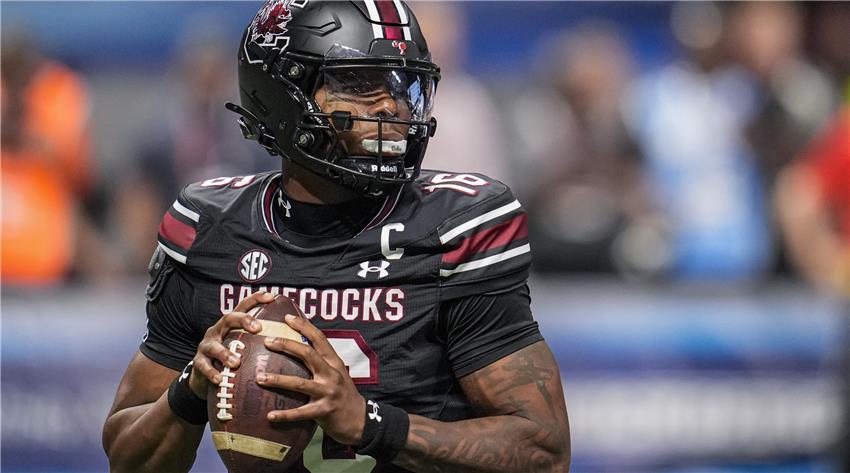
Notre Dame’s Jeremiyah Love went No. 3 overall to Arizona — the first running back drafted in the top five since Saquon Barkley went second overall to the Giants in 2018. His four-year rookie contract is worth $50,537,014 with a $12,634,254 AAV and a $33,214,190 signing bonus. His $53,022,816 in total guaranteed money eclipses Ezekiel Elliott’s previous RB record of $50,052,137 from his six-year, $90 million Cowboys extension in 2019. His $35,022,048 signing bonus also tops Barkley’s $36 million in overall guarantees from his two-year, $41.2 million Eagles deal. In college, Love started all 16 games in 2024, rushing for 1,125 yards and 17 touchdowns while adding 28 receptions for 237 yards. His final season produced 1,652 yards and 21 total scores. He earned a 91 Film Grade in the Rookie Super Model — top eight all-time — though his 75 Production Rating is the lowest among top-12 RBs since 2017. Fantasy Life projects him at 218 carries, 56 receptions, and 274 total touches, currently sitting at an Underdog ADP of 17.0 (RB11).
Jadarian Price, Love’s Notre Dame teammate, went No. 32 overall to the reigning Super Bowl champion Seattle Seahawks and recorded the second-biggest ADP surge of any player post-draft: a 47.7-spot jump from 105.5 all the way to 57.8 on Underdog. Kenneth Walker III left for Kansas City in free agency, and Zach Charbonnet tore his ACL in the divisional round on January 17th — surgery was performed February 20th, with a nine-month recovery timeline pointing to a mid-October return at the earliest. Price finished his final college season with 113 carries for 674 yards and 11 touchdowns in 12 games, running a 4.49 40-yard dash at 5-foot-11 and 203 pounds. Yahoo’s 2026 projection has him at 207 carries, 889 rushing yards, 7 touchdowns, and 19 receptions for 127 yards across 15 starts. Walker’s 221 carries and Charbonnet’s 184 carries from last season represent over 400 vacated touches — and ESPN’s Tim Hasselbeck has already flagged Price as the anticipated Week 1 starter.
On the wide receiver side, Carnell Tate went No. 4 to Tennessee, Jordyn Tyson went No. 8 to New Orleans, and Makai Lemon fell to No. 20 before Philadelphia traded up to grab him. Tate projects as Cam Ward’s WR1 from Day 1, with Fantasy Life forecasting 70 receptions, 924 yards, and 5.2 touchdowns — good for WR37 in half-PPR, currently going early in Round 6 at an Underdog ADP of 60.5. No Titans receiver topped a 17% target share last season. Tyson, who led Arizona State with 75 catches, 1,101 yards, and 10 touchdowns in 2024 after missing all of 2023 with a knee injury, sits at an Underdog ADP of 63.0. FanDuel prices Tate at +300 and Tyson at +340 in the “most rookie receiving yards” market — essentially a coin flip. Lemon projects for 59 receptions, 711 yards, and 5.3 touchdowns in Year 1 if A.J. Brown is moved after June 1, placing him at WR44 in half-PPR with a WR35 current draft position in the late Round 7 range.
How to Track ADP Shifts Before Your League Drafts
Understanding that fantasy football ADP is moving is one thing — knowing exactly where it lands, platform by platform, in real time is another. The most reliable tool for monitoring the live market is RotoWire’s ADP tracker at rotowire.com/football/adp.php, which pulls consensus data from MyFantasyLeague, Underdog Fantasy, and National Fantasy Championship formats and flags players who have moved more than 0.5 spots with a single arrow and those who have moved more than 10 spots with a double arrow, updated on a rolling five-day window. Not all ADP is the same, though — National Fantasy Championship events carry $150,000 top prizes and attract sharper, more informed consensus than casual home leagues. Cross-referencing Underdog for best ball trending, FantasyPros for expert consensus aggregation across 100-plus analysts, and your specific platform gives you the most complete picture of where the market actually stands.
Who to Target, Who to Fade, and Who to Watch
Price at Underdog ADP 57.8 is still a buy even after his 47.7-spot surge — Walker’s 221 carries and Charbonnet’s 184 carries left more than 400 touches on the table, and ESPN’s Jordan Reid named Price the rookie most likely to win fantasy leagues in 2026 outside of Love himself. Harold Fannin in Cleveland is a legitimate bargain after sliding from ADP 81.2 to 89.4 following the arrivals of KC Concepcion and Denzel Boston. Love at pick 17 (RB11), however, carries real downside risk — Arizona ranked 31st in rushing yards per game at 93.1 in 2025, and he enters a backfield that already includes Allgeier on a two-year, $12.25 million deal with $8 million guaranteed, and Conner at a restructured $3 million with $2.5 million in incentives. The players most worth watching are those tied to pending decisions: Charbonnet’s return timeline governs Price’s ceiling entirely, Brown’s June 1 status in Philadelphia directly determines whether Lemon’s 19% projected target share expands, and Chris Olave’s final contract year in New Orleans shapes whether Tyson or Olave is the actual priority in that passing game down the stretch.
Conclusion — The Window Is Short, Move Before the Market Catches Up
The gap between the last pick in Pittsburgh and your first real league draft is the most valuable analytical window on the fantasy calendar. ADP is still shifting daily. Casual managers have not updated their boards. The consensus has not yet fully priced in Tate’s target-share ceiling in Tennessee, Tyson’s volume consolidation potential in New Orleans, or the full downstream damage Love’s record-setting contract does to Arizona’s surrounding assets. That is exactly where your edge is. Update your board now, run the tools, and move before the market catches up.