
Arch Manning's Reality Check- Penn State's Collapse and the NFL Draft Stock Market Crash
Week 6's stunning upsets exposed overvalued quarterbacks while Ohio State's Carnell Tate and Texas Tech's David Bailey emerged as legitimate first-rounders.
The sixth week of the college football season delivered seismic shifts that will reverberate through NFL draft rooms next April. The stunning upsets of preseason powerhouses Penn State and Texas didn't just alter the College Football Playoff picture-they fundamentally changed how NFL scouts will evaluate this year's quarterback class and exposed critical questions about some of the most hyped prospects in recent memory.
What unfolded across stadiums from Pasadena to Gainesville wasn't just chaos for chaos's sake. It was a revealing weekend that separated pretenders from contenders, both for teams and individual draft prospects. The implications stretch far beyond this Saturday's rankings.
The Quarterback Crisis: When Hype Meets Reality
The most glaring storyline centers on Arch Manning, whose preseason Heisman Trophy odds and projected first-round draft status now look like distant mirages. Against Florida's aggressive defense, Manning completed just 16 of 29 passes for 263 yards with two touchdowns and two interceptions, taking six sacks in the process. His footwork deteriorates under pressure, his decision-making becomes erratic, and the offensive line provides minimal protection-a dangerous combination for any quarterback prospect.
The comparison to former Texas quarterbacks under Steve Sarkisian provides little comfort. While Quinn Ewers eventually developed into a reliable starter after early struggles, Manning faces unprecedented scrutiny. His performance metrics rank him 39th in FBS pass efficiency, a staggering fall for someone who entered the season as a betting favorite for the top overall pick. NFL evaluators who once circled his name in permanent marker are now reaching for the eraser.
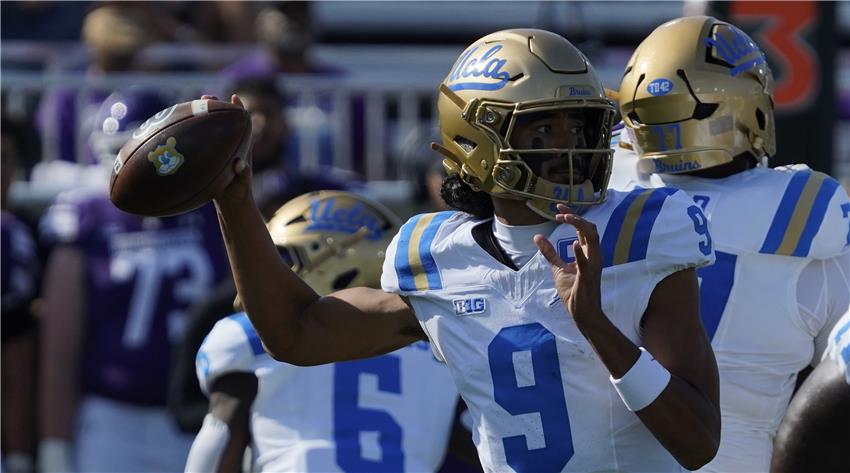
Conversely, UCLA's Nico Iamaleava authored one of the most impressive individual performances of the season, torching Penn State's vaunted defense for 166 passing yards, two touchdowns, and 150 rushing yards with three scores on the ground. The quarterback who had looked indecisive and overwhelmed through September suddenly played with the freedom and athleticism that made him a five-star recruit. NFL teams love dual-threat quarterbacks who can extend plays and create when the pocket collapses-Iamaleava showed he possesses both traits in abundance.
Meanwhile, Cade Klubnik's near-perfect performance against North Carolina (22-of-24 for 254 yards and four touchdowns) suggests the Clemson signal-caller might finally be finding his rhythm. After ranking 54th among power-conference quarterbacks entering the week, Klubnik demonstrated the accuracy and decision-making that NFL teams covet. His ability to rebound from early-season struggles will be closely monitored by scouts seeking quarterbacks who can handle adversity.
Drew Allar presents a different evaluation challenge. Despite Penn State's shocking loss to UCLA, Allar performed admirably, completing 19 of 26 passes for 200 yards while adding 89 rushing yards. His stat line reflects a quarterback who executed his responsibilities well, but the team's defensive collapse overshadowed his efforts. NFL teams will note that even solid quarterback play couldn't overcome systemic failures elsewhere-a reality many professional quarterbacks face weekly.
The Ohio State Receiving Factory Continues Production
While quarterback play dominated headlines, Carnell Tate quietly established himself as Ohio State's next great NFL receiver prospect. His nine-catch, 183-yard performance against Minnesota showcased elite traits that translate directly to the professional level. With an FBS-leading six receptions of 40-plus yards this season, Tate combines vertical speed with exceptional sideline awareness-a skill set that typically commands first-round consideration.
Tate's emergence alongside Jeremiah Smith creates a fascinating dynamic for NFL evaluators. Both receivers benefit from playing with exceptional quarterback Julian Sayin, but their individual skills shine through. Tate's ability to track deep balls, maintain body control along the sideline, and create separation on double moves mirrors the skill set of recent Buckeye first-rounders Chris Olave and Garrett Wilson. His 18.1 yards per reception average demonstrates big-play ability that every NFL offensive coordinator craves.
The receiver's consistency-he hasn't dropped a pass all season-adds another layer to his appeal. In an era where NFL teams increasingly rely on precise passing games, receivers who combine explosive ability with reliability command premium draft capital. Tate's trajectory suggests he'll hear his name called early next April.
Defensive Disruptors Rising Through the Rankings
Texas Tech's David Bailey has transformed from a transfer portal acquisition into a legitimate first-round prospect. Leading the FBS with 31 pressures through five games, Bailey terrorized Houston's offensive line with a masterful display of pass-rushing technique. His combination of explosive first-step quickness, bend around the edge, and diverse rush moves creates the type of consistent pressure NFL defensive coordinators dream about.
Bailey's performance against Houston-recording multiple sacks while consistently disrupting the pocket-exemplified why scouts believe he possesses first-round talent. Questions remain about his run defense instincts and hand usage, but as a pure pass rusher, few college players generate pressure with such regularity. In a passing-dominated NFL, edge rushers who can affect the quarterback command top draft positions.
Miami's Rueben Bain Jr. continues building his case as one of the draft's premier defensive prospects. His performance against Florida State, helping force three turnovers while applying consistent pressure, showcased the disruptive ability that makes defensive coordinators salivate. Bain combines power with athleticism in a way that translates seamlessly to the NFL level.
The Alabama Resurgence and Its Draft Implications
Alabama's victory over Vanderbilt provided crucial context for several draft prospects. Ty Simpson's 340-yard passing performance reinforced his emergence as a legitimate NFL prospect, completing 23 of 31 attempts with excellent ball placement and decision-making. Since the season-opening loss to Florida State, Simpson has thrown for nearly 1,500 yards with 13 touchdowns against just one interception-numbers that demand attention from NFL scouts.
Running back Jam Miller's 136-yard performance on 22 carries demonstrated the vision and burst that NFL teams seek in feature backs. His ability to find creases in Vanderbilt's disciplined defense while maintaining efficiency (6.2 yards per carry) suggests he can handle a professional workload. Miller's return from injury adds another dynamic to Alabama's offense and another name to NFL draft boards.
Germie Bernard continued his productive season as Simpson's primary target, showcasing the route-running precision and hands that make him an intriguing mid-round prospect. His chemistry with Simpson mirrors the quarterback-receiver connections that define successful NFL passing games. The duo's continued development will significantly impact both players' draft stock.
Keon Sabb's crucial interception against Vanderbilt highlighted his ball skills and range from the safety position. His ability to diagnose plays and arrive at the football makes him exactly the type of versatile defensive back NFL teams covet in their increasingly complex defensive schemes.
Cincinnati's Surprise Contributors Enter Draft Conversation
The Bearcats' upset of Iowa State introduced two players who significantly outperformed their preseason draft projections. Linebacker Jake Golday's 12-tackle, one-sack performance showcased the range and instincts that NFL teams value. At 6-foot-4, 237 pounds with 4.5 speed, Golday possesses the measurables that typically generate draft interest, but his performance against Iowa State proved he can translate those physical gifts into production.
More impressively, Golday demonstrated advanced coverage skills, flipping his hips smoothly and finding passing lanes-abilities that separate good college linebackers from NFL prospects. His transition from FCS defensive end to FBS linebacker shows the adaptability that professional teams appreciate. Initially projected as a late-round selection, Golday's trajectory now points toward the draft's middle rounds.
Quarterback Brendan Sorsby delivered when it mattered most, completing crucial throws including an 82-yard touchdown strike that sealed the victory. His arm talent flashed throughout the game, particularly on vertical routes where he displayed the velocity and accuracy NFL teams require. While mechanical inconsistencies remain, Sorsby's tools suggest developmental potential that could intrigue quarterback-needy teams in the later rounds.
The Tight End Renaissance: Unexpected Names Emerge
Baylor's Michael Trigg exploded onto the draft radar with a 155-yard receiving performance against Kansas State. At 6-foot-3, 250 pounds with above-average speed, Trigg possesses the size-speed combination that defines modern NFL tight ends. His ability to threaten defenses vertically while maintaining the physicality to work in traffic creates matchup problems at any level.
Trigg's journey through USC and Ole Miss before finding success at Baylor reflects the perseverance scouts appreciate. His career-best production this season (439 yards, four touchdowns through six games) suggests he's finally harnessing his considerable talent. The basketball background evident in his body control and catch radius adds another dimension to his game that translates well to professional concepts.
Eli Stowers at Vanderbilt and Max Klare at Ohio State represent the depth of this tight end class, each offering different skill sets that appeal to specific offensive systems. The position's evolution in the NFL toward more diverse, athletic players benefits this entire group.
Offensive Line Prospects Making Their Cases
The importance of offensive line play became painfully apparent in several high-profile games. Texas's struggles protecting Arch Manning highlighted how poor line play can derail even the most talented quarterbacks. Conversely, Alabama's improved blocking, anchored by Parker Brailsford at center and Kadyn Proctor at tackle, demonstrated how quality protection enables offensive success.
Proctor, who received Heisman consideration from at least one voter, represents the new breed of athletic offensive tackles that NFL teams covet. His ability to handle speed rushers while maintaining the power to create running lanes makes him a potential first-round selection. The contrast between Alabama's protection and Texas's struggles underscores the premium NFL teams place on offensive line talent.
Spencer Fano at Utah and Francis Mauigoa at Miami continue developing as potential early-round selections, each offering the size and athleticism that define modern NFL offensive linemen. Their continued development through conference play will significantly impact their draft positioning.
Under-the-Radar Risers Worth Monitoring
Michigan safety Rod Moore's return from a devastating knee injury provided one of the weekend's most inspiring storylines. Despite playing just 18 snaps against Wisconsin, Moore impacted the game with an interception and multiple crucial tackles. His pre-injury tape showed first-round talent; his ability to regain that form will determine whether NFL teams view him as a value selection or medical risk.
Navy quarterback Blake Horvath's 339-yard, three-touchdown passing performance against Air Force showcased skills that translate beyond the service academy's unique offense. His accuracy (20-of-26) combined with 130 rushing yards demonstrates the dual-threat ability that intrigues NFL teams seeking developmental quarterbacks. Horvath's 15-3 record as a starter adds the winning pedigree that often separates late-round quarterbacks from undrafted free agents.
Jordyn Tyson at Arizona State continues building his resume as a potential mid-round receiver, while Nicholas Singleton remains Penn State's most consistent offensive weapon despite the team's struggles. Both players demonstrate the consistency and production that often matters more to NFL teams than spectacular highlight reels.
Conference Realignment's Draft Impact
The SEC's competitive depth creates weekly opportunities for prospects to enhance or damage their draft stock. Texas and their prospects discovered this reality harshly, while Florida's defenders used the national stage to showcase their abilities. Tyreak Sapp and the Gators' defensive line dominated at the point of attack, demonstrating the physicality NFL teams expect from SEC products.
The Big Ten's expansion means more cross-country travel and potential trap games, as Penn State learned. However, it also provides more marquee matchups for prospects to prove themselves. This weekend's Oregon-Indiana clash will offer another stage for Fernando Mendoza and Matayo Uiagalelei to strengthen their draft cases.
The Big 12's wide-open race creates opportunities for prospects on unexpected teams to gain exposure. Cincinnati's rise and Iowa State's stumble demonstrate how quickly narratives can shift, affecting how NFL scouts prioritize their evaluations. Sam Leavitt at Arizona State represents the type of prospect who could significantly improve his stock through strong conference play.
Looking Ahead: Critical Games for Draft Prospects
Next weekend's schedule offers several crucial opportunities for draft prospects to make statements. The Oregon-Indiana matchup features potential first-round talents on both sides, while Texas faces Oklahoma in a game where Arch Manning desperately needs a signature performance to halt his sliding stock.
John Mateer's potential return from injury for Oklahoma adds intrigue to the Red River Rivalry, especially given his previous strong performances. His ability to outduel Manning would significantly impact both quarterbacks' draft narratives.
Alabama's upcoming gauntlet against Missouri and Tennessee will test whether Ty Simpson and Deontae Lawson can maintain their momentum against elite competition. Similarly, Miami's continued ACC schedule provides platforms for Carson Beck and Rueben Bain Jr. to solidify their first-round credentials.
The Draft's New Reality: Early Evaluation and Instant Judgment
Week 6 illustrated how the combination of NIL opportunities, transfer portal flexibility, and intense media coverage has transformed draft evaluation timelines. Prospects like Arch Manning face professional-level scrutiny before mastering college-level consistency. The patience traditionally afforded to developing players has evaporated in an era of instant analysis and social media reactions.
Yet this accelerated timeline also creates opportunities. Players like Nico Iamaleava can transform their draft stock with a single transcendent performance. The volatility that frustrates some evaluators excites others who recognize that identifying talent requires looking beyond weekly results to see broader developmental arcs.
As the season reaches its midpoint, the 2026 NFL Draft picture remains remarkably fluid. Preseason favorites have stumbled while unexpected names have emerged. The remaining weeks will determine whether this volatility represents temporary turbulence or permanent reordering of the draft hierarchy. For NFL teams seeking franchise-altering talent, the evaluation process has never been more complex-or more critical to get right.