
How College Football's Most Hyped Signal-Callers Have Stumbled Through 2025's Opening Act
The 2025 college football season's most hyped quarterback class has collapsed spectacularly through four weeks. Arch Manning faces boos at Texas, DJ Lagway threw five interceptions against LSU, Cade Klubnik has Clemson unranked, and Nico Iamaleava's UCLA transfer has backfired.
The 2025 college football season arrived with unprecedented expectations for its quarterback class. From Arch Manning's coronation as Texas's savior to Nico Iamaleava's transfer to UCLA, the narrative centered on how these young signal-callers would dominate the sport and position themselves for NFL stardom. Four weeks later, that narrative has crumbled spectacularly.
The numbers paint a stark picture of underperformance that has NFL scouts frantically revising their draft boards. Arch Manning, carrying the weight of football royalty on his shoulders, is completing just 55% of his passes with six interceptions against three touchdowns. Cade Klubnik, who threw for 36 touchdowns last season, has managed just three scores through three games while Clemson has tumbled from preseason fourth to completely unranked. LaNorris Sellers, once whispered as a dark-horse Heisman candidate, ranks near the bottom of most SEC passing categories.
Perhaps no performance encapsulated the quarterback crisis better than DJ Lagway's nightmare against LSU, where the Florida sophomore threw five interceptions in a game where his defense gave him every opportunity to succeed. Despite holding possession for nearly 38 minutes and running 76 plays, Lagway's turnovers transformed what should have been a competitive SEC battle into another chapter in Florida's ongoing offensive struggles.
Manning's Meltdown Shocks Austin
The scene at Darrell K Royal-Texas Memorial Stadium during halftime against UTEP spoke volumes about the pressure cooker Arch Manning finds himself in. After completing just 11-of-25 passes for 114 yards and missing on 10 consecutive throws, the Texas faithful actually booed their golden child quarterback off the field. This wasn't how Steve Sarkisian's offense was supposed to look with the most famous name in football under center.
Manning's struggles extend beyond one bad half. Through three games, he's shown an alarming inability to read post-snap coverage adjustments and has received minimal help from an inconsistent offensive line that has forced him to become Texas's leading rusher with 121 yards. His receivers, outside of Parker Livingstone and Jack Endries, have failed to create separation consistently, leaving Manning to force throws into tight windows that have resulted in costly turnovers.
The silver lining for Texas remains their elite defense and a schedule that offers breathing room. Sam Houston State arrives this weekend, followed by a bye week before traveling to face a struggling Florida team. These games represent Manning's best opportunity to rebuild confidence before the Red River Rivalry against Oklahoma, where the spotlight will burn even brighter.
The Transfer Portal Gambles That Haven't Paid Off
The quarterback transfer market promised instant success for several programs, but early returns suggest buyer's remorse is setting in across the country. Nico Iamaleava's move from Tennessee to UCLA has been nothing short of disastrous. The former five-star prospect has thrown three touchdowns against three interceptions while averaging just 200 passing yards per game. His body language has become a concern, particularly his lack of urgency in pursuing tacklers after turnovers, raising questions about his commitment to the program.
Fernando Mendoza represents one of the few transfer success stories, setting a new Indiana program record with a 95% completion percentage against Indiana State. However, critics rightfully point out that his production has come against weak competition, with the real test arriving this weekend against Illinois.
Gio Lopez's transition from South Alabama to North Carolina might be the most regrettable move of the offseason. After excelling as a dual-threat quarterback in 2024, Lopez finds himself dead last in ACC passing, averaging a paltry 114 yards per game for a Tar Heels program that appears years away from conference relevance.
Clemson's Championship Window Slams Shut
No program's quarterback disappointment carries more significant ramifications than Clemson's struggles with Cade Klubnik. The Tigers entered 2025 as preseason ACC favorites and national championship contenders, but Klubnik's regression has exposed fundamental flaws in Dabo Swinney's program. Completing under 60% of his passes with a 1:1 touchdown-to-interception ratio, Klubnik has been victimized by eight drops and constant pressure from a porous offensive line.
The Georgia Tech loss epitomized Clemson's offensive dysfunction. Klubnik's red-zone interception at the Yellow Jackets' 7-yard line to open the second half killed momentum in what became a devastating conference loss. His normally dynamic rushing ability has evaporated, managing just 59 yards on the ground with a fumble. The Tigers' schedule softens moving forward, but the damage to their playoff aspirations might already be irreversible.
SEC's Quarterback Crisis Deepens
The Southeastern Conference, traditionally the breeding ground for NFL quarterback talent, faces an unprecedented talent drought at the position. Garrett Nussmeier's performance against Florida drew harsh criticism from the broadcast booth despite LSU's victory. His careless interception late in the game, attempting to throw across his body and across the field, prompted Greg McElroy to question the fifth-year senior's decision-making in crucial moments.
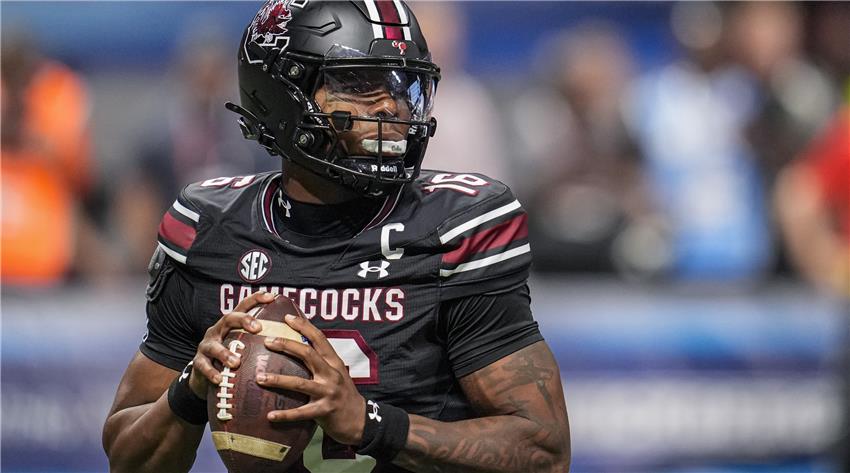
LaNorris Sellers entered the season with legitimate NFL draft buzz, but his development has stagnated dramatically. Before suffering a concussion against Vanderbilt, Sellers had thrown just two touchdown passes against one interception while completing 64% of his attempts. His rushing production, which made him dangerous in 2024, has plummeted to just 45 yards through three games as defenses have successfully contained his scrambling ability.
Drew Allar at Penn State hasn't been terrible, but mediocrity from a quarterback with his physical tools represents its own form of disappointment. The junior has been adequate against weak competition but hasn't shown the elite traits NFL scouts expected to see in his draft evaluation year.
The Surprising Success Stories
While established names have faltered, unexpected quarterbacks have seized the spotlight. Carson Beck's seamless transition to Miami has been remarkable, averaging 9.9 yards per attempt while completing nearly 80% of his passes. Beck's command of the Hurricanes' offense has Miami positioned as a legitimate playoff contender.
John Mateer's arrival at Oklahoma following his transfer from Washington State has rejuvenated the Sooners' offense. Despite throwing an interception in each game, Mateer's dual-threat ability and leadership have Oklahoma ranked 12th nationally and competing in the brutal SEC.
Diego Pavia continues to defy expectations at Vanderbilt, leading the Commodores to a shocking ranked status after demolishing South Carolina. His 177 yards and two touchdowns against the Gamecocks demonstrated the moxie and efficiency that have made him one of the conference's most valuable players despite modest statistics.
The NFL Draft Implications
The quarterback struggles have sent shockwaves through NFL front offices preparing for the 2026 draft. Players once projected as potential first-round selections have seen their stock plummet dramatically. Arch Manning, despite his pedigree, now faces questions about his ability to process complex defensive schemes at the next level. His tendency to lock onto primary receivers and struggle with post-snap reads raises concerns about his NFL readiness.
Cade Klubnik's draft projection has fallen from potential day-two selection to likely undrafted free agent territory if current trends continue. His inability to maintain consistency and protect the football in crucial situations suggests he might profile better as a developmental practice squad candidate rather than an immediate contributor.
Conversely, the success of transfer quarterbacks like Carson Beck and John Mateer has elevated their draft profiles significantly. Beck's combination of accuracy, arm strength, and decision-making has him climbing into first-round consideration, while Mateer's athleticism and improving pocket presence make him an intriguing day-two prospect.
The Offensive Line Factor
While quarterbacks shoulder the blame, the offensive line play across college football has been equally disappointing. Kadyn Proctor, Alabama's consensus All-American tackle, has allowed a sack and nine pressures through three games, showing the same technical flaws that plagued his freshman season. His struggles epitomize the protection issues plaguing quarterback play nationally.
At Georgia, Earnest Greene III's regression from potential early-round NFL draft pick to liability has disrupted the Bulldogs' offensive rhythm. His shift from left to right tackle hasn't solved fundamental issues with anchoring and changing direction, leaving quarterbacks under constant duress.
The protection problems extend to elite programs like Notre Dame, where Jeremiyah Love's rushing average has dropped by more than three yards per carry due to offensive line ineffectiveness. When Heisman-caliber running backs can't find running lanes, quarterbacks face impossible third-and-long situations that compound their struggles.
Looking Forward: Can These Quarterbacks Recover?
History suggests that early-season struggles don't necessarily doom a quarterback's entire campaign. Several factors could facilitate mid-season turnarounds for these struggling signal-callers. Schedule softening provides immediate relief for programs like Texas and Clemson, offering opportunities to rebuild confidence against overmatched opponents.
Coaching adjustments represent another path to improvement. Steve Sarkisian's track record of quarterback development suggests Arch Manning's struggles might be temporary growing pains rather than fundamental flaws. Similarly, offensive coordinators across the country are simplifying schemes and incorporating more quarterback-friendly concepts like RPOs and quick-game passing to reduce processing requirements.
The upcoming weeks feature several prove-it games that could reshape narratives. Manning faces a manageable stretch before the Red River Rivalry. Cade Klubnik gets opportunities against ACC bottom-feeders to rediscover his 2024 form. LaNorris Sellers must first recover from his concussion, but South Carolina's schedule offers chances for statistical rehabilitation.
The Broader Impact on College Football
The quarterback crisis has reshaped the entire college football landscape just four weeks into the season. Traditional powers like Clemson and Texas find themselves scrambling to salvage seasons that began with championship aspirations. Programs that invested heavily in transfer portal quarterbacks are learning expensive lessons about the challenges of integrating new signal-callers into existing systems.
Defensively-oriented teams have seized the opportunity, with programs like Georgia and Alabama proving that elite defense paired with adequate quarterback play remains a viable championship formula. The struggles of high-profile passers have validated old-school approaches that emphasize ball control and field position over explosive passing attacks.
Perhaps most significantly, the quarterback disappointments have accelerated coaching hot seats across the country. UCLA and Virginia Tech have already made changes, and administrators at programs like Florida and North Carolina are surely evaluating their options. Billy Napier's inability to develop DJ Lagway could seal his fate in Gainesville, particularly with ranked opponents looming in the next three games.
Conclusion: A Quarter-Season Reality Check
The 2025 college football season's opening act has delivered a harsh reality check about quarterback development and the dangers of preseason hype. The struggles of Arch Manning, Cade Klubnik, DJ Lagway, and others have reminded us that projection and production often diverge dramatically in college football.
For NFL scouts, the early returns necessitate extended evaluation periods and increased emphasis on late-season performance. The traditional practice of locking in draft grades by October no longer applies when established quarterbacks can regress so dramatically or unknown commodities can emerge from nowhere.
The next two months will determine whether this quarterback class can salvage its reputation or whether 2025 will be remembered as the year college football's most important position experienced a collective failure. With conference play intensifying and playoff races taking shape, these struggling signal-callers face a simple reality: improve immediately or watch their teams' seasons and their own draft dreams evaporate entirely.
The quarterback position has never been more challenging at the college level, with complex defensive schemes, increased pressure from NIL expectations, and the constant threat of the transfer portal creating unprecedented volatility. The 2025 season's first quarter has proven that even the most talented and hyped quarterbacks aren't immune to these pressures. How they respond will define not just their individual futures, but the trajectory of college football's most storied programs.