
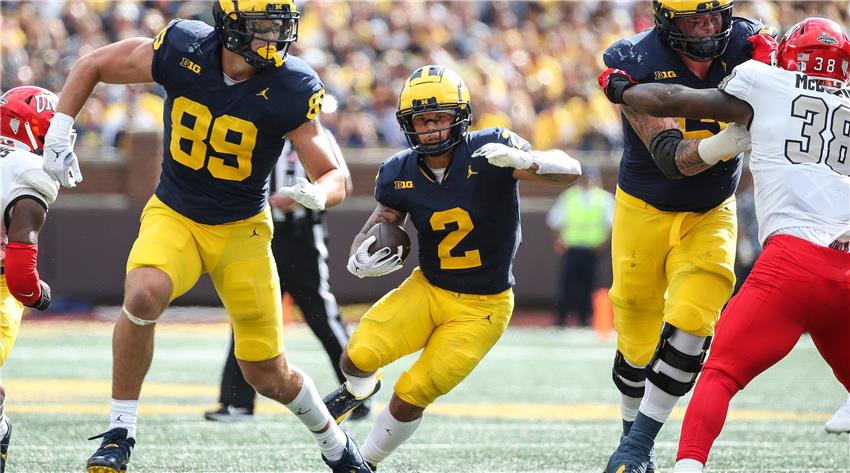
The Rookie Snap-Count Trap: Why a Breakout NFL Prospect Can Lose a Live Bet Without Getting Injured
Carnell Tate's Weeks 1-5 usage and the Titans' Week 6 trip to Indianapolis show why a highlight is not opportunity in live NFL player props.
A rookie receiver makes a spectacular 28-yard catch on the opening drive (a hypothetical scenario to frame the point). The live receiving-yards line adjusts upward, partly because the player has already banked yardage against the pre-game total. Two series later, he is standing on the sideline while a veteran takes the snaps. That is the overlooked risk in In-Play betting: a highlight can change the price in seconds, while the player's actual role for the remaining three quarters is set by his coaches, not by the catch.
A Verified 2026 Example: Carnell Tate Ahead of Week 6
With the 2026 NFL regular season at Week 6 (October 15 to 19), the first five weeks of participation data give bettors their first real evidence of how coaches are deploying this draft class. Carnell Tate, drafted fourth overall by the Tennessee Titans in April 2026 out of Ohio State and the first wide receiver off the board, is a useful live case study. In the Titans' Week 3 loss to the New York Giants, Tate caught six of nine targets for 58 yards and led the team in snaps, catches and targets, yet both Calvin Ridley and Elic Ayomanor accumulated more receiving yardage on the day. Across Weeks 2 and 3 combined, Tate saw 14 targets, cementing his role as a primary read for second-year quarterback Cam Ward.
That pattern already contains the trap in miniature. Target volume, snap share and yardage are three different measurements, and they can point in three different directions in the same game. Tennessee visits the Indianapolis Colts on Saturday, 18 October, in Week 6, and anyone looking at a live Tate receiving-yards market during that game will be reading a price that reflects his accumulated yardage to that point, the pre-game projection, in-game events and the operator's own model. A rookie leading his team in targets is not automatically a profitable over bet; the line may already account for exactly that usage.
Why Snap Counts and Target Shares Are Not the Same Thing
An NFL player's statistical ceiling in a given game is capped by the snaps he is on the field for, and within those snaps by the share of targets and the depth of routes he actually runs. Participation data, published after each game in the NFL's official gamebooks referenced on the league's NFL Football Operations rules portal, is the primary source for how much any player played and in which packages.
Four coaching decisions shape those numbers for a rookie in Week 6, and none of them are visible from a single highlight. Personnel package: a receiver who thrives in 11-personnel can sit for extended 12-personnel stretches when the staff wants to run the ball. Situational usage: a rookie shielded from third-and-long passing-down pressure may lose the exact snaps that produce yardage. Veteran rotation: a trusted possession target still gets explicit two-minute drill snaps. Game script: a team ahead by two scores at halftime does not throw the same volume as a team trailing. The Titans' depth chart around Tate (Ridley, Ayomanor, Wan'Dale Robinson, Chimere Dike) is exactly the kind of room in which snap share, target share and yardage can part ways on any given Sunday.
Five Sportsbooks: Five Questions to Check Before Betting Rookie Props
The table below groups five international sportsbooks and one live-betting question worth asking of each one before taking a rookie prop. The questions describe general market mechanics rather than operator-exclusive rules, and specific availability, wording and legal eligibility for NFL markets must be checked against each operator's current terms in the bettor's jurisdiction.
|
Bookmaker |
Question to check before placing a live rookie prop |
|
BetBeast |
Is a live receiving-yards market even listed for this rookie, and does it remain available after each scoring play? |
|
SpinBetter |
How does the sportsbook handle market suspension during an injury review, a replay challenge or an overturned reception? |
|
GGBet |
How does the standard live line compare to the alternate lines offered on the same player, and what remaining production does each one require? |
|
MegaPari |
What are the participation requirements and void-bet provisions if the rookie leaves the field for part or all of the game? |
|
BoomerangBet |
Does cash-out remain available after a sudden odds move or an injury, and under what conditions is it withdrawn? |
Two of those questions, participation rules and cash-out availability, concern contractual settlement risk rather than playing-time risk. A rookie who is active but seeing a reduced snap share can still cost a ticket money even when every market works exactly as described. The two risks are distinct and often compound in the same direction.
The Four Signals Worth Checking Before a Live Player Prop
Four quick live-game checks separate a disciplined live rookie wager from a highlight chase. They apply equally to established sports betting sites and to new betting sites that add NFL player props mid-season.
-
Offensive participation on the drive just played. Was the rookie on the field for every snap, split with a veteran, or only in a specific personnel package? Live play-by-play and broadcast cutaways are the most reliable in-game indicators.
-
Route involvement, not just targets. A receiver who ran the full route tree and did not get looked at is in a different situation from one who was only on the field for run-blocking. Comprehensive route data is a postgame product, not a between-drives one.
-
Game situation. Score margin, time remaining and down-and-distance tendencies tell the bettor whether the remaining snaps are likely to be passing situations at all.
-
Market settlement terms. Whether the market requires full-game participation, what counts as participation and how substitutions are handled are the questions that decide the ticket if a rookie leaves the field.
Official postgame snap counts, team participation reports and advanced tracking from the league's own NFL Next Gen Stats program are more useful for establishing usage patterns before the next matchup than for verifying every route between live drives. Public access to the advanced metrics typically arrives the day after a game. That is why the Weeks 1 to 5 trend for a player like Tate, including the Week 3 snap and target lead that did not translate into team-high yardage, is the strongest evidence a Week 6 bettor has going into Sunday.
Why Draft Grades Are Not Playing-Time Projections
A high draft grade predicts a prospect's ceiling. It does not predict his October production. Coaches have their own timelines, dictated by veteran contracts, depth-chart realities, protection schemes and preseason install. Tate was the first wide receiver drafted in 2026 and is already seeing meaningful volume, yet the yardage distribution behind him in Tennessee's receiver room reflects decisions that have nothing to do with his college tape. Scouting evaluates the ceiling. The depth chart decides the floor on any given Sunday.
For bettors moving from draft analysis into live markets, the discipline is to reassess, not to react. A line that just moved after a highlight is a new price, not automatically a bad one. The useful question is whether the revised number still leaves realistic room for the player's expected opportunities over the remaining drives, given the snap share seen so far, the game script and the depth-chart competition around him.
A spectacular play changes the yards already banked. It does not change what the coach plans to do on the next drive. That gap is the trap, and the way out of it is to read the usage trend as carefully as the box score.